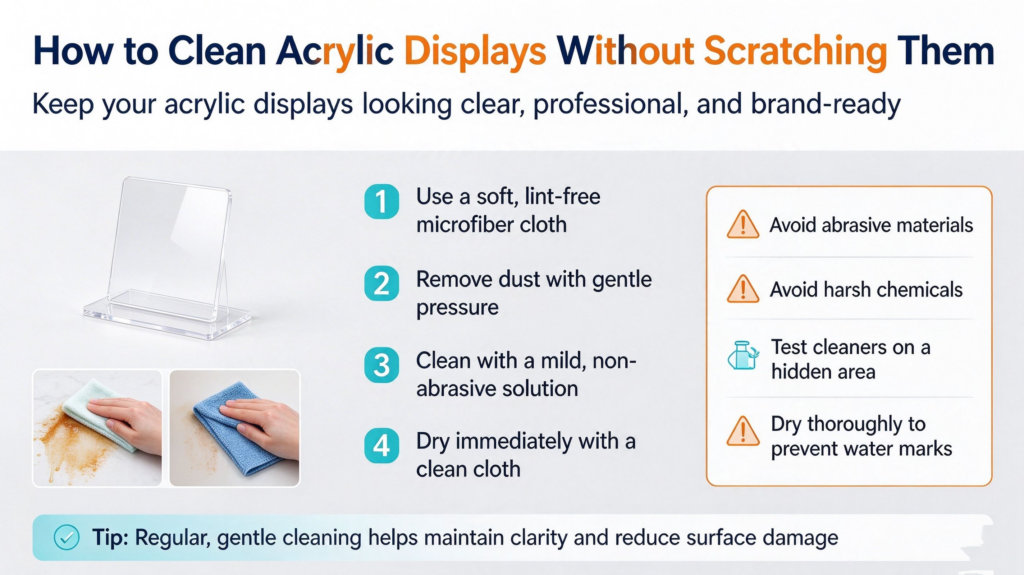
How to Clean Acrylic Displays Without Scratching Them
Knowing how to clean acrylic displays correctly helps retailers keep their products looking clear, professional, and ready for customers. Acrylic display stands are popular in cosmetics stores, gift shops, retail counters, and trade show booths because of their transparency and modern appearance. However, improper cleaning can leave scratches, cloudy marks, or fine surface cracks.
The good news is that routine maintenance is usually simple. With the right cleaning materials and a gentle technique, you can keep your custom acrylic display stands looking their best for longer.
Why Acrylic Displays Need Special Care
Acrylic is a durable and lightweight display material, but its surface can still be scratched by abrasive materials and damaged by incompatible chemicals.
Common cleaning problems include:
Fine scratches: Dust, grit, and rough cloths can scratch the surface during wiping.
Cloudy patches: Some cleaners may damage acrylic or affect its surface finish.
Streaks and water marks: Excessive cleaning solution or improper drying can leave visible residue.
Static and dust buildup: Wiping acrylic can create static electricity that attracts dust.
Damage around printed areas: Harsh chemicals or aggressive rubbing may affect decorative finishes, depending on the printing method and coating.
These problems are especially noticeable on transparent acrylic displays because customers can see both the products and the display structure.
The Safest Way to Clean Acrylic Displays
For everyday maintenance, mild soap and lukewarm water are a good starting point for many standard acrylic surfaces. Always follow the cleaning instructions provided for your specific product, particularly if it has a special coating, printed graphics, or bonded components.
Follow these steps:
Remove loose dust carefully. Use a clean, soft, slightly damp microfiber cloth. Avoid rubbing dry dust across the surface.
Prepare a mild cleaning solution. Mix a small amount of mild soap with lukewarm water.
Wipe gently. Use light pressure and smooth movements. Do not scrub aggressively.
Rinse away residue. Wipe with a separate clean cloth dampened with fresh water.
Dry carefully. Blot the surface with a clean, soft cloth to reduce water marks.
Inspect the finish. Check the edges, corners, joints, and printed areas for remaining residue.
For larger displays, clean one section at a time. This makes it easier to remove residue before it dries.
For additional technical guidance, see ACRYLITE’s official acrylic cleaning and maintenance recommendations.
Which Cleaning Products Should You Avoid?
Choosing the wrong cleaner can cause more damage than ordinary daily use. A product suitable for glass, metal, or other retail fixtures may not be suitable for acrylic.
Avoid the following unless the acrylic manufacturer has specifically confirmed compatibility:
Abrasive powders and scouring pads: These can leave scratches and dull the surface.
Rough paper towels: Their texture and any trapped particles can damage acrylic during wiping.
Strong solvents: Acetone and certain other solvents can damage acrylic and cause fine cracks known as crazing.
Unverified glass cleaners: Some contain ingredients that are unsuitable for standard acrylic.
Harsh scrubbing brushes: These can scratch clear panels and polished edges.
Unapproved disinfectants: Some disinfecting products may damage acrylic or its decorative finish.
Do not assume that a cleaner is safe simply because it is advertised as suitable for glass or general household use. If you are unsure, test a compatible product on a small, inconspicuous area first and follow the material supplier’s instructions.
How to Remove Fingerprints, Dust, and Water Marks
Different types of marks require slightly different approaches.
Fingerprints and light smudges
Use a clean, soft microfiber cloth dampened with water. Wipe gently rather than applying pressure to remove the marks.
Dust on display shelves
Dust can accumulate on horizontal shelves, around product holders, and inside corners. Use a soft, slightly damp cloth and clean from the top down so that dust does not settle on areas you have already finished.
Water marks
Wipe the affected area with a clean cloth dampened with fresh water, then blot it dry. Avoid using stronger chemicals simply because a water mark is difficult to remove.
Sticky residue
Adhesive residue from labels or promotional stickers may require special treatment. Do not scrape it with a blade or immediately apply a strong solvent. Check the acrylic supplier’s recommendations and test any approved remover on an inconspicuous area first.
Dust that returns quickly
Acrylic can develop static electricity, which attracts airborne dust. A cleaner specifically approved for acrylic and designed to reduce static may help. Confirm compatibility before applying it to displays with printed graphics or special surface treatments.
How to Protect Printed Logos and Decorative Finishes
Custom acrylic displays often feature UV-printed logos, laser-engraved details, colored panels, or decorative surface effects. These features may need more care than a plain, transparent acrylic panel.
To protect them:
Use a soft cloth and light pressure around printed logos.
Avoid aggressive rubbing over printed graphics or coated surfaces.
Do not apply cleaning chemicals directly to decorative areas without checking compatibility.
Keep cleaning cloths free from dust and debris.
Follow any special maintenance instructions supplied with the finished display.
For example, a cosmetics counter display may combine clear acrylic shelves with a printed brand logo. Cleaning both areas with the same unverified chemical could affect the appearance of the logo even if the transparent panels seem unaffected.
When ordering custom acrylic displays, it is useful to ask the manufacturer for recommended cleaning methods based on the actual materials and finishes used.
How Often Should Retail Acrylic Displays Be Cleaned?
The ideal cleaning frequency depends on the location, customer traffic, and products being displayed.
| Display environment | Practical maintenance approach |
|---|---|
| Cosmetics counters | Check daily for fingerprints, makeup residue, and product spills |
| High-traffic retail shelves | Inspect daily and clean visible marks as needed |
| Trade show displays | Clean before packing, before setup, and after handling |
| Low-traffic product showcases | Inspect regularly and clean when dust or marks become visible |
| Promotional displays | Check after restocking or changing promotional materials |
These are general guidelines rather than fixed schedules. Displays exposed to frequent handling, dust, or product residue may need more attention.
Regular light cleaning is usually preferable to waiting until dirt builds up and then scrubbing aggressively.
How to Prevent Scratches During Storage and Transport
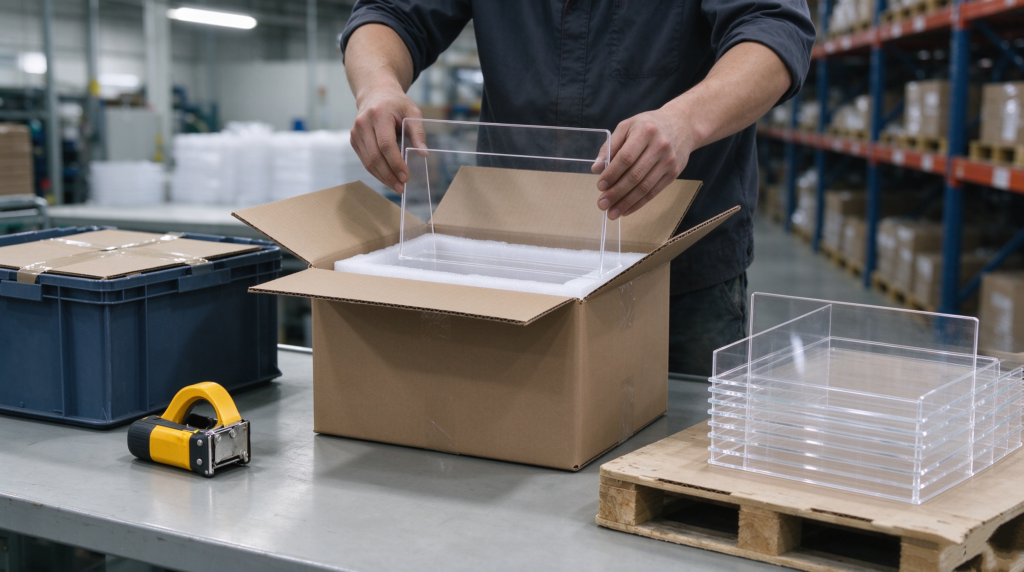
Cleaning is only one part of acrylic display maintenance. Scratches can also occur when displays are packed, moved, or stored incorrectly.
Consider these precautions:
Keep protective film on applicable acrylic parts until they are ready for use.
Place clean, soft protective material between surfaces that could rub against each other.
Avoid stacking unprotected acrylic panels directly together.
Store displays away from abrasive materials and dusty work areas.
Lift displays instead of dragging them across counters.
Pack detachable shelves and accessories so that they cannot move freely during transport.
For brands shipping custom displays to multiple retail locations, packaging design is particularly important. A display that arrives scratched may require additional cleaning, repair, or replacement before it can be presented to customers.
Learn more about protecting products in transit in our guide to acrylic display packaging.
Can Scratched Acrylic Displays Be Repaired?
Some light surface scratches may be improved with a polish specifically approved for the acrylic material. However, the result depends on the scratch depth, surface finish, and whether the display has a special coating or printed decoration.
Before attempting a repair:
Clean the surface gently to remove dust and grit.
Identify whether the damage is a scratch, chemical mark, or crack.
Confirm that the proposed repair product is compatible with the material.
Test the method in a discreet area if the supplier permits it.
Consult the manufacturer before attempting to polish coated, printed, or bonded areas.
Deep scratches, cracks, and damage near bonded joints may not be suitable for simple polishing. Aggressive sanding or buffing can also change the original finish, so it is not recommended to experiment on a finished retail display.
If the display has extensive damage, compare the cost and appearance of professional repair with replacement.
What Should Buyers Ask Before Ordering Custom Acrylic Displays?
Cleaning and maintenance are worth considering before production, especially when displays will be used in busy retail environments.
When discussing a custom project with your manufacturer, ask:
Which acrylic materials and surface finishes will be used?
Are any panels coated, printed, or decorated?
Which cleaning products are compatible with the finished display?
Are there areas that require special care?
How should the display be protected during shipment and storage?
Can cleaning instructions be provided for store staff?
These questions help your team maintain a consistent appearance across multiple locations and reduce avoidable damage during everyday use.
At MORICH, custom acrylic display projects can be developed around product presentation, brand graphics, structure, and finishing requirements. Sharing the intended retail environment and maintenance expectations early helps the manufacturer consider practical details alongside appearance.
Explore our custom acrylic display products or learn more about our manufacturing capabilities.
Frequently Asked Questions
Can I clean acrylic displays with glass cleaner?
Not all glass cleaners are suitable for acrylic. Some contain chemicals that may damage standard acrylic surfaces. Use a cleaner recommended for your specific material and follow the manufacturer’s instructions.
Can paper towels scratch acrylic?
Yes. Paper towels can contain rough fibers or trapped particles that scratch acrylic during wiping. A clean, soft microfiber cloth is generally a better choice.
Why does my acrylic display attract dust after cleaning?
Acrylic can develop static electricity during handling and cleaning. An acrylic-compatible antistatic cleaner may help reduce dust attraction, provided it is suitable for the display’s surface finish.
How do I clean an acrylic display with a printed logo?
Start with a soft cloth and a mild cleaning method compatible with the acrylic. Avoid aggressive rubbing and unverified chemicals around the printed area. Ask the manufacturer for specific guidance if the logo has a special finish.
What is the best way to keep acrylic displays looking clear?
Clean them gently with suitable materials, avoid abrasive tools and incompatible chemicals, remove spills promptly, and protect the surfaces during storage and transport. Consistent maintenance is more effective than aggressive cleaning after dirt has accumulated.
Keep Your Acrylic Displays Looking Professional
Learning how to clean acrylic displays helps protect their transparency, finish, and overall presentation. Mild cleaning solutions, soft cloths, careful drying, and suitable storage practices can prevent many common problems.
For buyers investing in custom acrylic displays, maintenance should be considered alongside design, branding, packaging, and product placement. A well-designed display is more useful when it is also easy for retail staff to care for.
If you are planning a custom acrylic display project, contact MORICH to discuss your product requirements, surface finishes, and intended retail environment.