
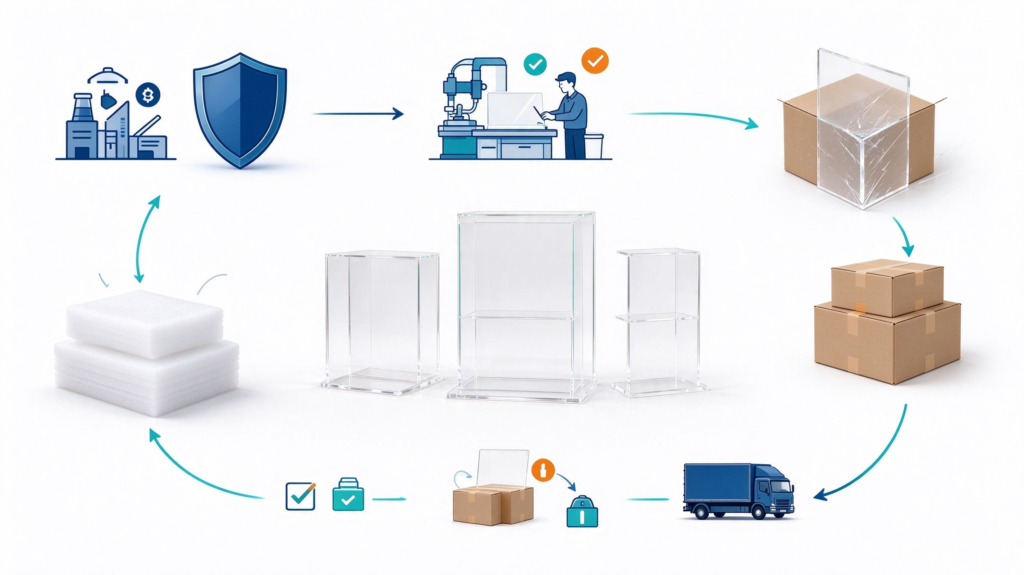
Acrylic display protection is an important part of custom display manufacturing. A display stand may look perfect when it leaves the factory, but scratches, cracked corners, damaged logos, or loose components can turn it into a problem before it reaches the buyer.
For retailers, cosmetics brands, and distributors, product protection should not begin only when an order is packed. A professional acrylic display supplier should consider protection throughout the entire process, from design and production to packaging, shipping, and after-sales support.
So, what protection should buyers expect when working with a custom acrylic display manufacturer?
1. Surface Protection Against Scratches
Clear acrylic displays are valued for their transparency and polished appearance. Even minor scratches can be noticeable under retail lighting, especially on large transparent panels and premium cosmetic displays.
A professional supplier should take reasonable steps to protect visible surfaces during manufacturing, handling, assembly, and packing.
These measures may include:
Keeping suitable protective film on acrylic sheets during appropriate production stages.
Using clean work surfaces to reduce the risk of scratches caused by dust or debris.
Handling finished parts carefully during assembly.
Separating components that could rub against each other.
Checking visible surfaces before packing.
Providing guidance on when to remove protective film.
Protective film is useful, but it is not a complete solution. If parts are handled carelessly or packed together without sufficient separation, scratches can still occur.
What buyers should ask: How do you protect transparent acrylic surfaces during production and final assembly?
2. Edge and Corner Protection
Acrylic display edges and corners deserve special attention. Polished edges contribute to the product’s appearance, while exposed corners can be vulnerable to impact during handling and transportation.
A professional supplier should consider both the finished design and the protection required for delivery.
Depending on the display structure, suitable measures may include:
Using protective materials around vulnerable corners.
Separating individual panels with appropriate cushioning.
Preventing finished edges from rubbing against hard packaging materials.
Securing protruding parts so they cannot move freely inside the carton.
Checking corners, joints, and edges during final inspection.
The protection method should match the actual product. A small countertop sign and a multi-level acrylic display with several shelves do not necessarily require the same packaging design.
3. Protection for Printed Logos and Decorative Finishes
Custom acrylic displays often include UV-printed logos, graphics, colored panels, laser engraving, or other decorative effects. These details may be essential to a brand’s retail presentation.
Damage to a logo can make an otherwise usable display unsuitable for commercial use.
A supplier should identify decorative surfaces that need special handling and choose suitable protective materials and packing methods. For example, printed surfaces should not be placed directly against materials that could rub, transfer residue, or damage the finish.
Buyers should also clarify whether a protective film or packing material is compatible with the printed or decorated surface.
For displays with multiple finishes, the supplier should consider the needs of each area rather than applying one protection method to every component.
What buyers should ask: How will you protect the printed logo and finished surfaces without leaving residue or damaging the decoration?
4. Protection Through Quality Inspection
Packaging cannot compensate for a display that is already defective. A professional supplier should inspect the product before it is packed.
The inspection process should reflect the agreed specifications and the intended use of the display.
Typical checks may include:
Appearance: Visible scratches, cracks, chips, cloudy areas, and other surface defects.
Dimensions: Whether the finished product matches the approved specifications.
Assembly: Whether bonded joints, connections, and assembled parts are acceptable.
Function: Whether shelves, holders, slots, or other features work as intended.
Branding: Whether the logo placement, printed graphics, and colors meet the approved requirements.
Cleanliness: Whether dust, adhesive residue, or other contamination remains on visible surfaces.
For larger orders, buyers may also agree on inspection criteria, sampling procedures, reference samples, and photo documentation before production begins.
The important point is that quality expectations should be agreed upon in advance. Words such as “good quality” or “careful inspection” are less useful than clear, verifiable acceptance criteria.
5. Protective Packaging for International Shipping
Shipping is one of the most important stages in acrylic display protection. Packages may be stacked, handled multiple times, transferred between vehicles, or exposed to vibration during transit.
A professional supplier should select packaging based on the display’s size, weight, structure, surface finish, and shipping method.
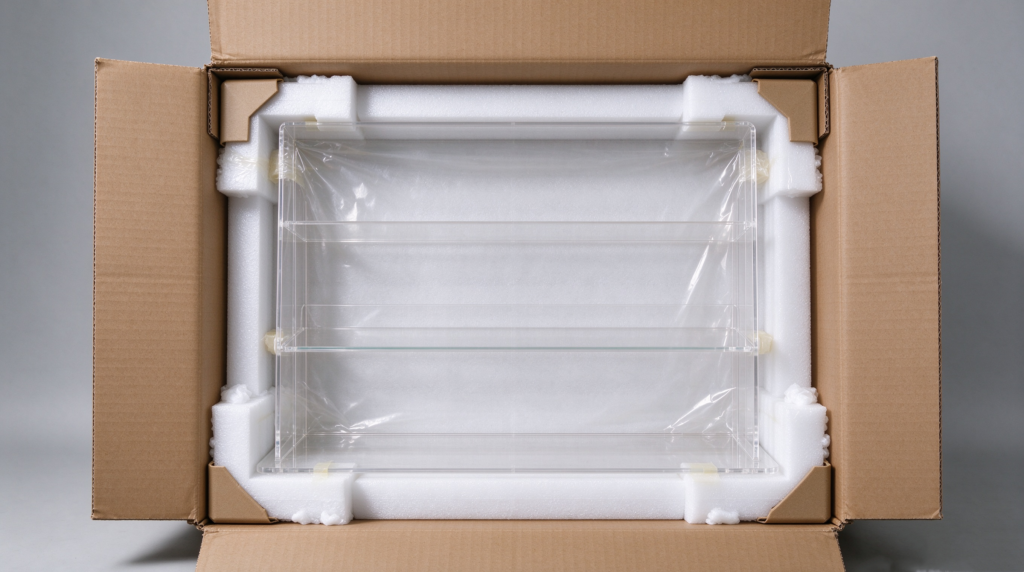
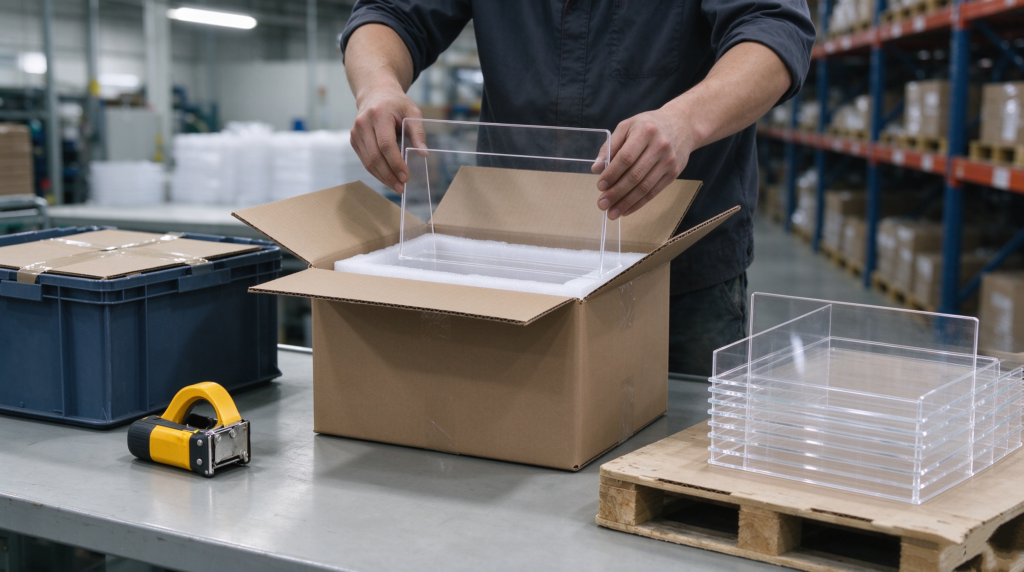
Depending on the project, protection may include:
Individual wrapping for finished components.
Soft interleaving materials between acrylic surfaces.
Corner protectors for vulnerable areas.
Foam or other cushioning materials selected for the product.
Inner cartons or dividers to separate components.
Outer cartons or reinforced packaging suitable for the shipment.
Secure packing arrangements that limit movement inside the package.
For fragile, heavy, unusually shaped, or high-value displays, additional packaging measures may be necessary.
The goal is not simply to use more packaging. It is to prevent impact, abrasion, pressure, and movement from damaging the display while keeping the package practical to handle and ship.
For more details, read our guide to acrylic display packaging.
6. Protection Against Missing or Damaged Components
Some custom acrylic displays are shipped fully assembled, while others contain separate shelves, connectors, sign holders, or installation accessories.
If small parts are missing or damaged, the buyer may be unable to assemble or use the display as planned.
A professional supplier should establish a packing checklist based on the approved product configuration.
Useful measures include:
Counting components and accessories before packing.
Separating small parts into clearly organized protective bags or compartments.
Preventing accessories from scratching the main display.
Providing assembly instructions when the design requires them.
Checking the packed quantity against the order requirements.
For displays intended for multiple retail locations, consistent packing is especially useful. Store staff should receive the required components in a predictable arrangement rather than having to identify loose parts themselves.
7. Protection Through Clear Order Specifications
Some display problems begin before manufacturing. If surface requirements, packaging expectations, or inspection standards are unclear, the supplier and buyer may have different ideas about what constitutes an acceptable finished product.
A professional supplier should clarify important requirements before production.
The order documentation may include:
Approved drawings and product dimensions.
Material and thickness specifications.
Logo artwork and finishing requirements.
Surface appearance and acceptable defect criteria.
Assembly and functional requirements.
Individual packing and shipping requirements.
Inspection and approval procedures.
When appropriate, a pre-production sample or approved reference sample can help both parties confirm expectations.
Buyers should also identify any special requirements, such as individually packed displays, retail-ready packaging, or separate packaging for replacement parts.
Clear specifications help reduce misunderstandings and make quality checks more objective.
8. Protection During Transportation and Delivery
Even well-packed products can encounter unexpected shipping problems. Buyers should understand how the supplier plans for delivery and how responsibilities are divided between the parties involved.
Before placing an order, discuss:
The intended shipping method and destination.
Whether the packaging is suitable for the chosen transport route.
How cartons and components will be identified.
Who arranges transportation and insurance, where applicable.
What evidence is needed if damage is discovered upon delivery.
How shipping damage should be reported and reviewed.
Shipping responsibilities depend on the agreed contract and delivery terms. Buyers should confirm the applicable Incoterm, insurance arrangements, and claims process rather than assuming that every supplier offers the same coverage.
When goods arrive, inspect the outer cartons and products promptly. Photograph visible packaging damage and affected components, and retain the packaging until the issue has been reviewed.
These records can help the buyer, supplier, carrier, and insurer investigate what happened.
9. Protection Through After-Sales Support
A supplier’s responsibility should not end with a shipping notification. If a buyer discovers a quality issue or transit damage, clear communication and a documented review process can make the situation easier to resolve.
Before ordering, buyers should understand the supplier’s approach to:
Reviewing reported quality problems.
Evaluating photographs, videos, and inspection records.
Determining whether the issue relates to manufacturing, packaging, handling, or transportation.
Agreeing on an appropriate corrective action when responsibility is established.
Preventing the same issue from recurring on future orders.
This does not mean every supplier can guarantee that no damage will ever occur. A professional supplier should instead explain the agreed quality standards, document the relevant process, and handle reported problems transparently.
Buyers should request written confirmation of any warranty, replacement, compensation, or claims terms that are important to their project.
How to Evaluate an Acrylic Display Supplier’s Protection Standards
Before choosing a supplier, ask for specific information rather than relying only on general promises.
| Protection area | Questions buyers should ask |
|---|---|
| Surface protection | How are clear acrylic surfaces protected from scratches? |
| Edge protection | How are corners and polished edges protected during packing? |
| Logo protection | How are printed graphics and decorative finishes handled? |
| Quality inspection | What is checked before the display is packed? |
| Packaging | How is the packaging selected for the product and shipping method? |
| Components | How are accessories counted, separated, and secured? |
| Documentation | Can the supplier provide agreed inspection records or packing photos? |
| After-sales support | What is the process for reporting and reviewing defects or transit damage? |
A supplier’s answers should be consistent with the product’s complexity and the buyer’s requirements. For a simple acrylic sign holder, the process may be straightforward. A large custom display with multiple shelves, printed panels, and detachable components may need a more detailed protection plan.
How MORICH Approaches Custom Acrylic Display Projects
At MORICH, custom acrylic display projects involve more than producing the requested shape. Product structure, visible surfaces, decorative finishes, assembly, and packaging all affect the final result.
Discussing these requirements early gives the manufacturing team a clearer basis for developing the display and planning its protection.
For your project, you can provide product dimensions, reference images, logo artwork, target retail environment, and shipping requirements. These details help the supplier understand which areas need particular attention and what should be checked before dispatch.
Explore our custom acrylic display products and manufacturing capabilities, or contact MORICH to discuss your project requirements.
Frequently Asked Questions
What is the most important protection for acrylic displays?
There is no single measure that protects every display. Surface protection, careful handling, appropriate packaging, and pre-shipment inspection work together to reduce the risk of scratches, cracks, and other damage.
Should acrylic displays be shipped with protective film?
Protective film can help protect suitable acrylic surfaces during manufacturing and handling. Whether it should remain on the product during shipment depends on the material, finish, adhesive compatibility, and supplier’s recommendations.
Who is responsible if an acrylic display arrives damaged?
Responsibility depends on the contract, applicable delivery terms, insurance arrangements, and the circumstances of the damage. Buyers should document the condition of the shipment and report problems promptly according to the agreed procedure.
Should buyers request photos before shipment?
For custom or large orders, agreed pre-shipment photos can help buyers review visible appearance, packing arrangements, and product quantities. Photos are useful evidence but do not replace any formal inspection or testing required by the order.
What should be included in an acrylic display protection plan?
A practical plan should cover surface handling, edge and corner protection, decorative finishes, quality inspection, packaging, component control, transportation requirements, and the procedure for handling reported problems.
Final Thoughts
Professional acrylic display protection is a process, not just a layer of film or a carton around the finished product.
Buyers should expect a supplier to consider the display’s surface, structure, branding, inspection requirements, packaging, transportation, and after-sales communication. The specific measures will vary by project, but the expectations should be clear before production begins.
When comparing acrylic display suppliers, look beyond the product photos and quoted price. Ask how the supplier protects the product, verifies quality, and responds when something goes wrong. Those answers can help you choose a manufacturing partner that understands the needs of your business.