
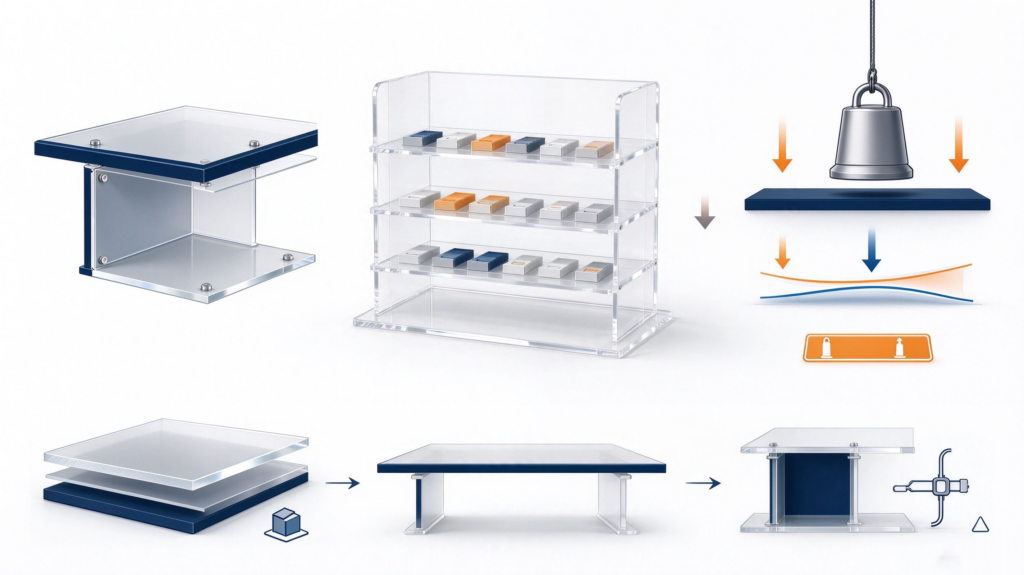
Acrylic Display Weight Capacity: What Buyers Should Know
When ordering a custom acrylic display, one important question is how much weight it can safely hold. Acrylic display weight capacity depends on more than sheet thickness. Shelf dimensions, support points, connections, and the weight distribution of displayed products all affect performance.
For retailers and brands, understanding these factors helps prevent sagging, cracking, and product damage.

1. Acrylic Thickness Is Only One Factor
Thicker acrylic can improve stiffness, but it does not automatically make every display stronger. A long shelf made from thick acrylic may still bend if it lacks adequate support.
When reviewing a design, consider:
Acrylic sheet thickness.
Shelf length and depth.
Distance between support points.
Overall display structure.
How the acrylic components are connected.
The right combination depends on the actual product and its intended use.
2. Shelf Span Affects Load Capacity
The distance between supports is a major factor in how much a shelf may bend under load.
A wide, unsupported span generally requires more careful structural design than a short shelf with additional support. If a display will hold heavy bottles, jars, or boxed products, tell the manufacturer their dimensions and weight before production.
Adding supports or adjusting shelf geometry may be more practical than simply increasing acrylic thickness.
3. Weight Distribution Matters
A display holding ten products does not necessarily experience the same load as another display holding ten products of equal total weight.
Products concentrated in the center may create different stresses from products distributed evenly across the shelf. Heavy items placed near the front edge may also affect the structure differently.
Provide your supplier with the approximate weight of each product and show how the products will be arranged. This helps the factory assess the design under realistic conditions.
4. Check Joints and Connections
Acrylic displays may use bonded joints, slots, fasteners, or other connections. These areas can influence the strength of the finished assembly.
A professional manufacturer should consider how the connections transfer loads and whether the structure is suitable for repeated handling and everyday retail use.
Do not evaluate capacity from the acrylic sheet alone. The complete display must be considered.
5. Ask for a Load Test When Necessary
If your display will hold expensive products or substantial weight, discuss load verification before approving mass production.
Ask your supplier to agree on:
The intended total load.
The placement of products during testing.
The required holding time.
Acceptable shelf deflection.
Any signs of cracking, joint failure, or permanent deformation.
There is no universal weight limit for all acrylic displays. Capacity should be assessed for the specific design rather than estimated from thickness alone.
What Should You Send Your Acrylic Display Manufacturer?
To help evaluate acrylic display weight capacity, provide:
Product dimensions and weight.
The number of products per shelf.
A reference image or proposed display layout.
The expected loading arrangement.
Any special requirements for long-term display use.
MORICH develops custom acrylic displays based on product and project requirements. Sharing load information early helps the team consider shelf structure, material specifications, and suitable support arrangements during design.
Explore our custom acrylic displays or contact MORICH to discuss your project.

Frequently Asked Questions
Can thicker acrylic hold more weight?
It can improve stiffness in many designs, but capacity also depends on shelf span, support, connections, and load distribution.
Will an acrylic shelf bend over time?
It may, depending on the material, dimensions, applied load, temperature, and duration of loading. Ask the manufacturer to evaluate your intended conditions.
How can I prevent an acrylic display shelf from sagging?
Possible solutions include reducing the unsupported span, adding appropriate supports, or revising the structure. The best option depends on the specific design.
Final Thoughts
Choosing the right acrylic display weight capacity starts with understanding the products the display must hold. Share accurate product weights and layouts with your manufacturer, and request appropriate verification when the application requires it. A design based on actual loading conditions is more reliable than choosing acrylic thickness alone.