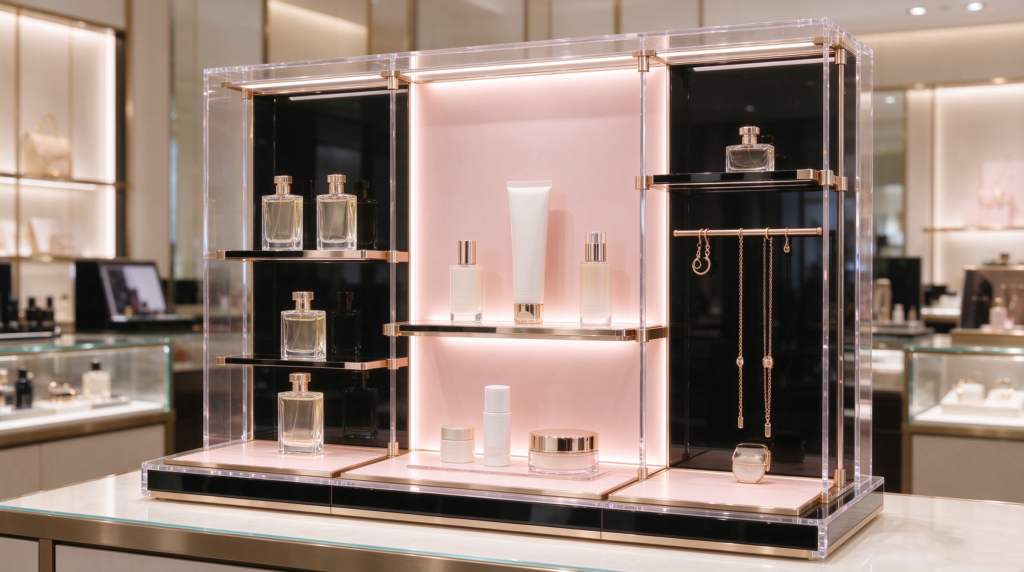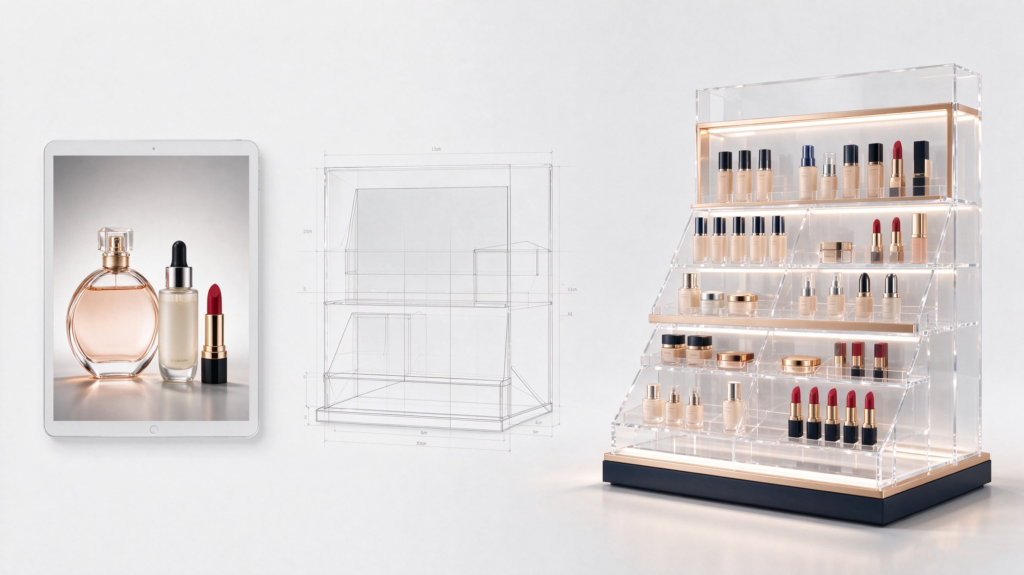
Yes. A Custom Acrylic Display from a Photo is a practical starting point for buyers who have a product idea but do not have professional CAD drawings or technical specifications.
You do not always need a complete engineering file before contacting a manufacturer. A reference photo, product image, hand-drawn sketch or existing display sample can help communicate your initial idea.
At MORICH, we work with customers to understand their display requirements and evaluate how an idea can be developed into a manufacturable acrylic product.
Here are five steps to help you get started.
1. Share Your Reference Photo or Product Idea
Start by sending the manufacturer whatever visual information you already have.
Useful references include:
Photos of an existing display you like
Pictures of the product you want to display
Hand-drawn sketches
Screenshots of similar products
Examples of preferred colors, shapes or branding
You do not need to have everything finalized. The purpose of this first step is to help the manufacturer understand the direction of your project.
If you have several reference images, explain which details you want to keep and which parts you want to change.
2. Explain What the Display Needs to Do
A display should be designed around its actual application, not appearance alone.
Tell the manufacturer:
What product will be displayed?
How many products should each unit hold?
Will it be placed on a countertop, shelf or floor?
Will customers handle the displayed products?
Does it need a logo, printed graphics or special compartments?
These details help determine the appropriate structure and design.
For example, a display for cosmetic products may need individual product positions, while an electronics accessory display may require multiple compartments and clear product labels.
3. Provide Basic Dimensions and Product Information
Even without an engineering drawing, approximate measurements are helpful.
If possible, provide:
Product length, width and height
Product weight
Desired overall display dimensions
Estimated number of products per display
Expected order quantity
If you cannot measure everything immediately, send the product itself or clear photos with a familiar object for scale.
The manufacturer may need additional measurements before confirming the final structure. This helps reduce misunderstandings during design development.
4. Review the Proposed Design Before Sampling
After understanding your requirements, the manufacturer can evaluate the concept and discuss a suitable structure.
Depending on project complexity, the next step may involve a preliminary drawing, 3D visualization or technical design.
Review important details carefully:
Overall dimensions and proportions
Product placement and accessibility
Acrylic thickness and material selection
Logo position and printing requirements
Assembly and packaging considerations
If your logo or graphics will be printed on the display, providing vector artwork is helpful. Adobe explains why vector graphics are useful for logos and designs that need to scale without losing clarity in its guide to vector files.
Before sampling begins, make sure the important design requirements have been discussed and confirmed.
5. Develop a Sample and Evaluate the Result
A sample allows you to evaluate the actual product rather than relying only on a picture or drawing.
Depending on your project, you can review:
Overall appearance and dimensions
Product fit and stability
Edge finishing and bonding
Printing and logo placement
Assembly and practical usability
If adjustments are necessary, communicate them clearly before moving to mass production.
A sample review is particularly useful for custom projects because it gives both the buyer and manufacturer an opportunity to identify design issues before larger quantities are produced.
What If You Only Have an Idea, Not a Drawing?
That is a reasonable starting point for a custom project.
MORICH is backed by Guangdong Yuefeng Display Products Co., Ltd., an established manufacturer in Dongguan, China. Our manufacturing capabilities include design coordination, sample development, acrylic cutting, CNC machining, edge polishing, bonding, printing, assembly and inspection.
The processes used depend on the product design and confirmed requirements.
You can also explore our custom acrylic commercial displays and manufacturing capabilities to understand our product and production scope.
Start Your Custom Acrylic Display Project with MORICH
You do not need a perfect technical drawing to start a conversation.
If you have a product photo, reference image or display idea, send it to MORICH along with any available dimensions, estimated quantity and branding requirements.
Our team can review the information, discuss the project requirements and help identify the next steps for developing your custom acrylic display.
Have an idea you want to turn into a real product?
Contact MORICH to discuss your project.
MORICH — More Rich in Every Display.