
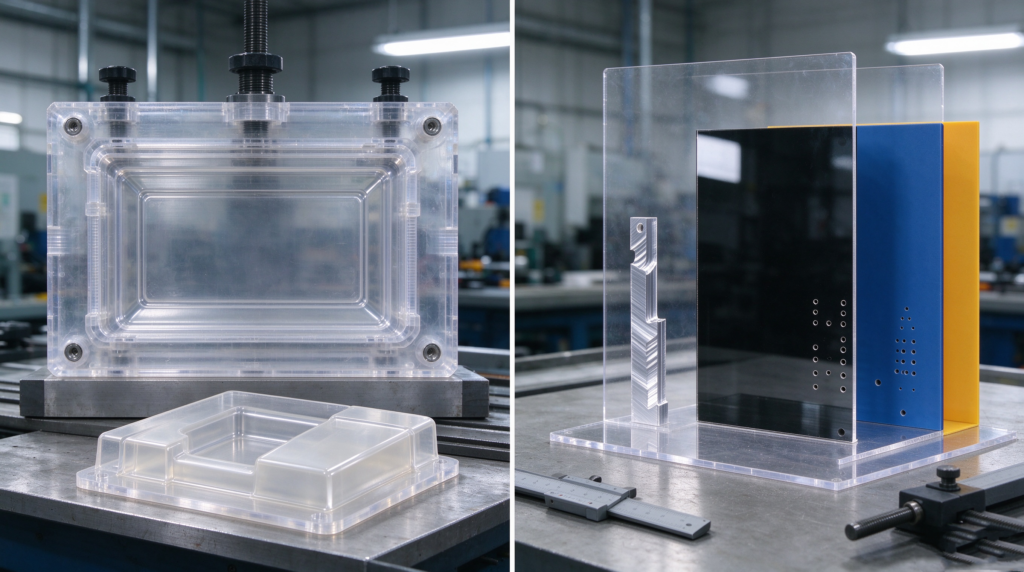
Do You Need an Acrylic Display Mould?
An acrylic display mould is not always necessary when producing a custom acrylic display. Many acrylic displays can be manufactured directly from acrylic sheets using processes such as laser cutting, CNC routing, polishing, printing and assembly.
For brands, retailers and distributors, this can make custom display development more flexible, especially when the project requires a unique design, prototype or relatively small production quantity.
However, whether a mould is necessary depends on the product structure and manufacturing method. Understanding the difference can help buyers choose a more suitable production solution.
1. Custom Acrylic Displays Can Be Made From Sheets
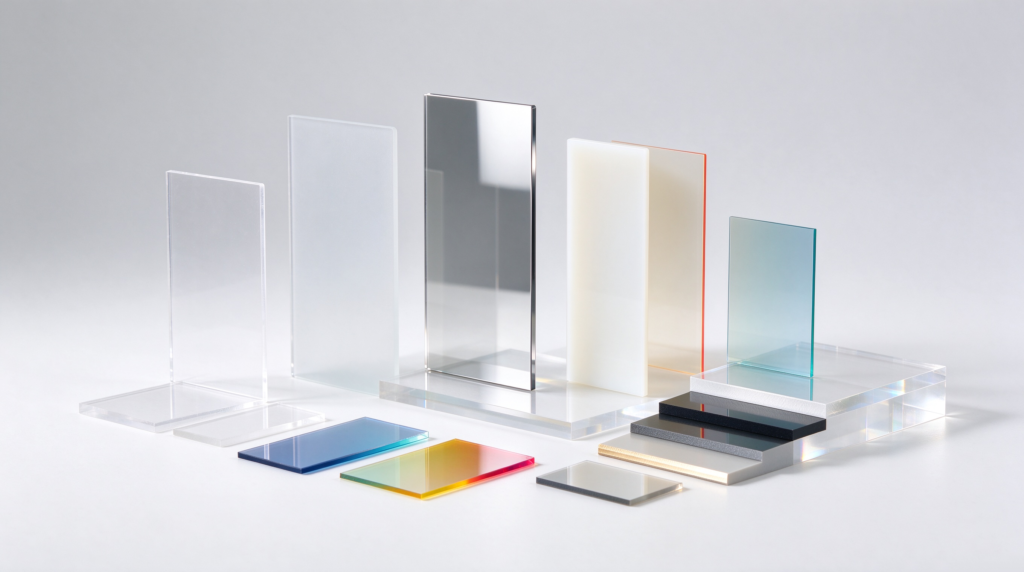
Many acrylic displays start with flat acrylic sheets rather than pre-molded parts.
The sheet can be cut into individual components according to the required dimensions and design. Laser cutting is suitable for many acrylic sheet applications, while CNC routing can be used for shapes, grooves, holes and other machined features.
This means a display can often be produced without creating a dedicated mould.
For example, a countertop display may consist of:
- Base panels
- Shelves
- Dividers
- Back panels
- Product holders
- Logo components
Each component can be cut and processed separately before being assembled into the finished display.
2. Avoiding a Mould Can Make Customization Easier
One major advantage of sheet-based acrylic fabrication is design flexibility.
If a buyer changes the display width, shelf position or logo area, the digital drawing can be modified before production. The manufacturer can then adjust the cutting file and produce the updated components.
This is particularly useful for custom projects where the design may change during development.
An acrylic display mould, by comparison, is a dedicated tooling solution. If the product relies on a specific moulding or forming process, changes to the tool may require additional work.
For custom retail displays, direct sheet fabrication can therefore be a practical option when the design is based on cut and assembled acrylic components.
3. Prototypes Often Do Not Need a Dedicated Mould
Prototyping is an important part of custom display development.
Before placing a large production order, buyers may want to check:
- Overall dimensions
- Product fit
- Display stability
- Logo placement
- Visual appearance
- Assembly
- Packaging
Creating a prototype through CNC or laser cutting allows the design to be evaluated before mass production.
This can be especially useful when a buyer is developing a new retail display or launching a new product.
Instead of investing in dedicated tooling at the beginning, the manufacturer can produce a prototype from acrylic sheet and make design adjustments based on the sample.
4. Moulds Are More Relevant to Certain Forming Processes
Saying that acrylic products never need moulds would be incorrect.
Moulds or forming tools can be used when acrylic sheet is heated and thermoformed into specific three-dimensional shapes. Professional acrylic fabrication references describe thermoforming and the use of forming tools for applications requiring shaped components.
For example, a mould may become relevant when the design requires:
- Deep three-dimensional shapes
- Repeated formed contours
- Complex curved surfaces
- Thermoformed components
- Specific formed geometries
The important question is therefore not simply whether an acrylic product uses a mould.
The better question is:
Does the design require a mould-based forming process?
If the answer is no, a sheet-fabrication process may be more suitable.
5. CNC and Laser Cutting Provide Design Flexibility
CNC routing and laser cutting are two important processes for custom acrylic displays.
Laser cutting can produce complex shapes from acrylic sheet and is widely used for cutting acrylic components. CNC routing can also create slots, grooves, contours and other machined features.
For a custom display manufacturer, these processes allow different components to be produced from digital design files.
A typical production workflow may look like:
Design → Material Selection → Laser Cutting / CNC Routing → Edge Finishing → Printing or Engraving → Assembly → Inspection → Packaging
This approach is particularly suitable for displays made from multiple flat acrylic components.
Acrylic Display Mould vs. Sheet Fabrication
When choosing a manufacturing method, buyers should consider the actual design rather than assuming that every acrylic product requires moulding.
| Factor | Sheet Fabrication | Mould-Based Forming |
|---|---|---|
| Typical process | Laser cutting / CNC routing | Heating and forming |
| Dedicated mould | Usually not required | Usually required |
| Design changes | Generally flexible | May require tooling changes |
| Prototypes | Suitable | Can involve tooling |
| Flat components | Highly suitable | Usually unnecessary |
| Complex formed shapes | Limited | More suitable |
The right process depends on the geometry, quantity, material and production requirements of the project.
When Should You Ask About an Acrylic Display Mould?
Before requesting a quotation, provide the manufacturer with as much design information as possible.
Useful information includes:
- Overall dimensions
- Product dimensions and weight
- Reference images
- 2D drawings
- 3D files if available
- Required acrylic color
- Acrylic thickness
- Surface finish
- Logo and artwork
- Estimated quantity
- Packaging requirements
With this information, the manufacturer can determine whether the design can be produced directly from acrylic sheet or whether a forming process and tooling may be appropriate.
How MORICH Produces Custom Acrylic Displays
MORICH focuses on custom acrylic finished products and display solutions.
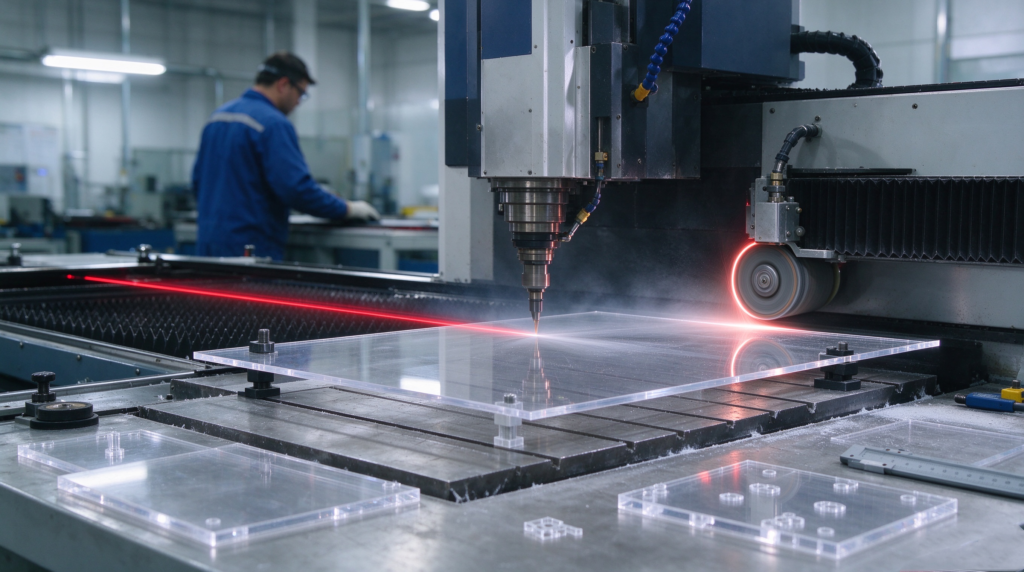
For many of our custom display projects, a dedicated mould is not required. Instead, the design can be developed using acrylic sheet fabrication processes such as CNC routing, laser cutting, edge polishing, printing, engraving and assembly.
This approach gives buyers more flexibility when developing prototypes or customized display structures.
For example, a buyer can provide a product image, drawing or basic concept. Our team can then review the design and determine the suitable material, thickness, processing method and assembly structure.
The goal is not to use a mould simply because it is available.
The goal is to choose the manufacturing process that fits the actual product.
What Is the Best Manufacturing Method for Your Display?
There is no single production method that is suitable for every acrylic product.
If your display is mainly constructed from flat acrylic components, laser cutting and CNC routing may provide a practical solution without a dedicated mould.
If the design requires complex three-dimensional thermoformed shapes, moulds or forming tools may become necessary.
For this reason, buyers should discuss the design with an experienced acrylic display manufacturer before deciding on the production method.
Custom Acrylic Displays Without Unnecessary Tooling
An acrylic display mould is not automatically required for every custom acrylic display.
For many sheet-based display designs, direct fabrication can provide the flexibility needed for prototypes, customized structures and changing designs.
MORICH can evaluate your drawings, product requirements and expected quantity to help determine an appropriate manufacturing approach.
Have a custom acrylic display design but are not sure whether you need a mould? Send your design to MORICH for a production assessment and quotation.