
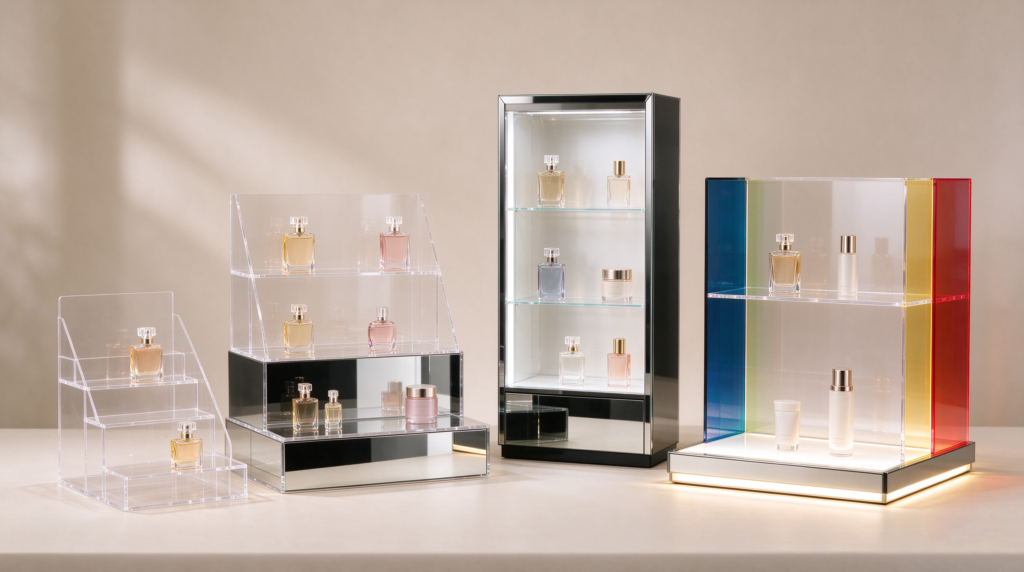
The cost of a custom acrylic display depends on much more than the size of the finished product. Material thickness, design complexity, finishing, printing, order quantity and packaging can all affect the final price.
For brands, retailers and distributors, understanding these factors before requesting a quotation can make the purchasing process faster and help avoid unexpected costs.
1. Acrylic Material and Thickness
Acrylic thickness is one of the basic factors affecting the cost of a custom display.
Common thicknesses include 2mm, 3mm, 5mm, 6mm, 8mm and 10mm, although the appropriate thickness depends on the structure and application.
A thicker acrylic sheet generally requires more material and can increase the overall cost. However, choosing the thickest material is not always necessary.
For example, a small countertop sign may require much less material than a large multi-layer product display.
The right thickness should be selected based on the product weight, display dimensions and structural design.
2. Display Size and Structure
Larger displays normally require more acrylic material and may require additional components for support.
A simple flat display can have a very different production cost from a multi-layer display with shelves, partitions and multiple assembled parts.
When evaluating a custom acrylic display cost, consider:
- Overall dimensions
- Number of components
- Number of shelves
- Structural supports
- Assembly requirements
- Packaging dimensions
A detailed drawing or 3D design can help a manufacturer provide a more accurate quotation.
3. Design Complexity
The complexity of the design can have a significant effect on production time.
A simple acrylic display may only require cutting, polishing and assembly. More complex projects may involve multiple cutting processes, holes, slots, curved components or precision assembly.
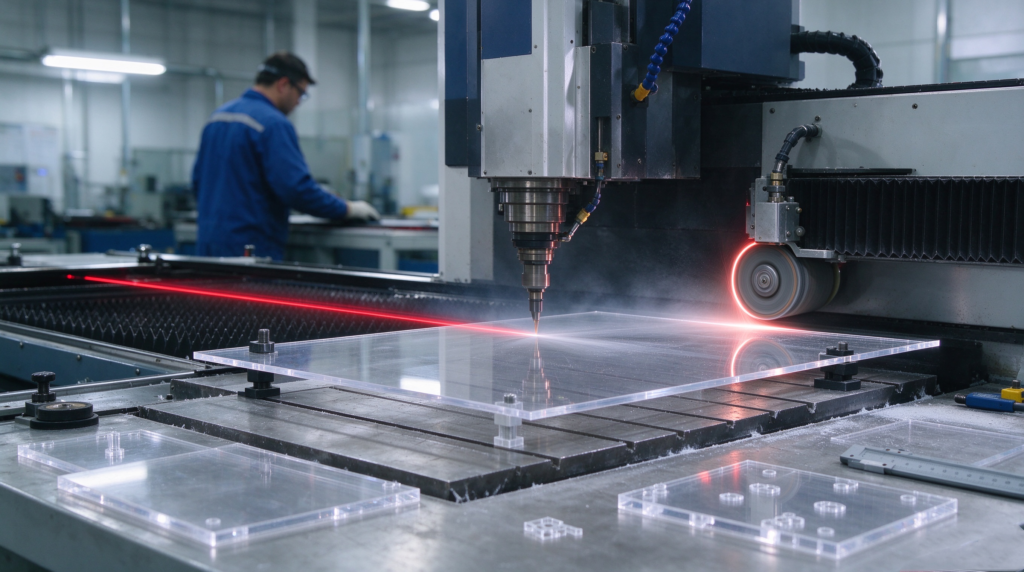
For example, acrylic CNC routing and laser cutting may be used for different design requirements.
The more individual components a display contains, the more processing and assembly time may be required.
4. Edge Finishing
The edges of an acrylic display can be finished in different ways depending on the desired appearance.
Common processes include:
- Cutting
- Flame polishing
- Diamond polishing
- CNC machining
- Sanding
- Special edge finishing
For premium retail displays, polished edges can provide a cleaner appearance and improve the overall visual quality.
However, additional finishing processes can increase production time and therefore affect the final quotation.
5. Printing and Decoration
Branding is another factor to consider when calculating custom acrylic display cost.
Acrylic displays can incorporate different decorative methods, including:
- UV printing
- Silk-screen printing
- Laser engraving
- Printed logos
- Decorative patterns
- Colored acrylic components
A display with a simple logo may require less processing than a display with full-surface graphics and multiple printing layers.
When requesting a quote, providing the artwork or logo file can help the manufacturer evaluate the printing requirements more accurately.
6. Order Quantity
Quantity can have a significant impact on the unit cost.
A prototype or small sample order requires setup and production work that may be spread across only a few pieces.
For larger production runs, certain costs can be distributed across more units, potentially reducing the average manufacturing cost per display.
For this reason, buyers should provide both the expected sample quantity and estimated mass-production quantity when requesting a quotation.
7. Packaging and Shipping
Packaging should also be considered when evaluating the total cost of a custom acrylic display.
Acrylic products need suitable protection during transportation because surfaces and edges can be vulnerable to scratches or impact.
Depending on the product, packaging may include:
- Protective film
- Foam protection
- Individual cartons
- Inner packaging
- Master cartons
- Custom packaging
For international orders, packaging dimensions can also affect shipping costs.
8. How to Get an Accurate Custom Acrylic Display Quote
Instead of asking only for a unit price, provide as much project information as possible.
A useful quotation request should include:
- Product dimensions
- Acrylic thickness if known
- Product drawings or reference images
- Logo and artwork
- Required finishing
- Estimated quantity
- Packaging requirements
- Delivery destination
If some specifications are not finalized, a manufacturer can usually recommend suitable options based on the intended application.
Custom Acrylic Displays from MORICH
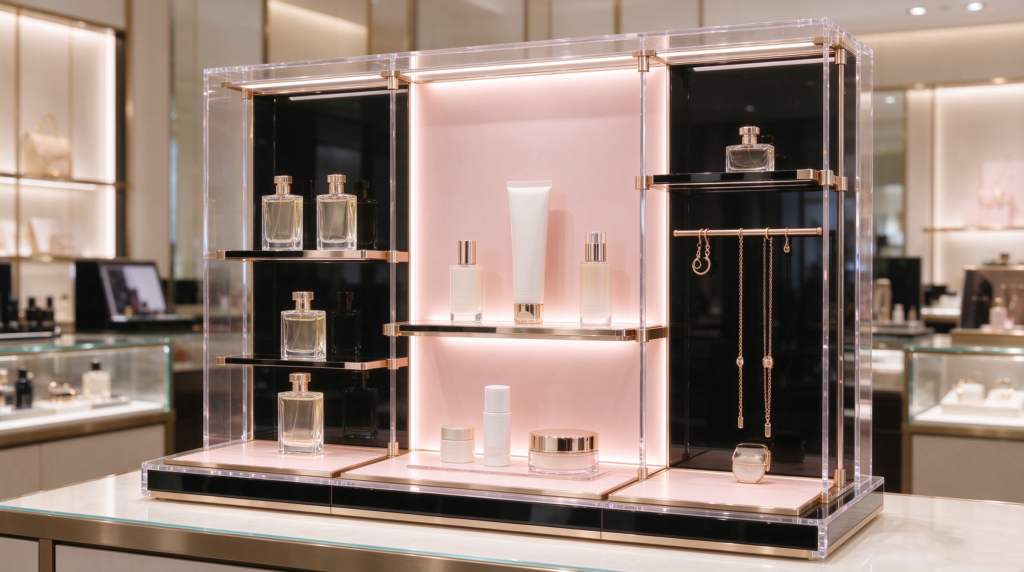
MORICH develops custom acrylic displays for brands, retailers and commercial applications.
Our production capabilities include acrylic cutting, CNC routing, laser cutting, edge polishing, UV printing, laser engraving and display assembly.
We can evaluate the design, material requirements and finishing options before production to help buyers develop a practical solution for their project.
If you already have a drawing, product image or basic concept, send it to MORICH for a custom quotation.
Need a custom acrylic display for your brand? Contact MORICH to discuss your project.