
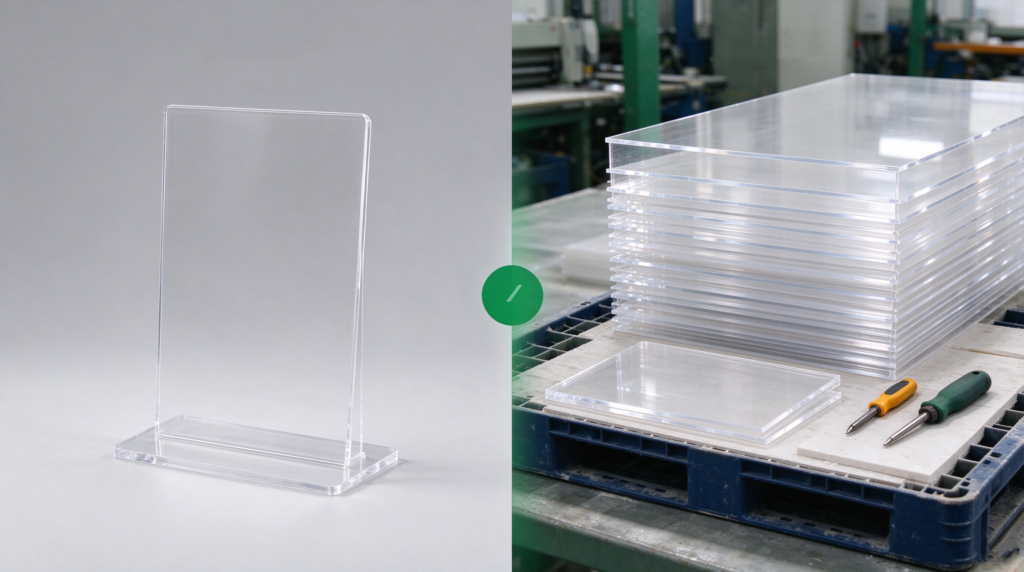
Acrylic Display Sample vs Mass Production: Why Does It Matter?
When ordering custom acrylic displays, approving a sample is an important step before mass production. However, the acrylic display sample vs mass production process involves more than checking whether the sample looks good.
A sample may look perfect, but problems can still appear in a bulk order if dimensions, materials, logo artwork, assembly methods, or quality requirements are not clearly confirmed.
For retailers, brand owners, importers, and wholesalers, these problems can lead to delayed launches, extra costs, and inconsistent product presentation.
The good news is that many issues can be prevented before production begins. Here are seven essential checks every buyer should complete before approving a custom acrylic display order.
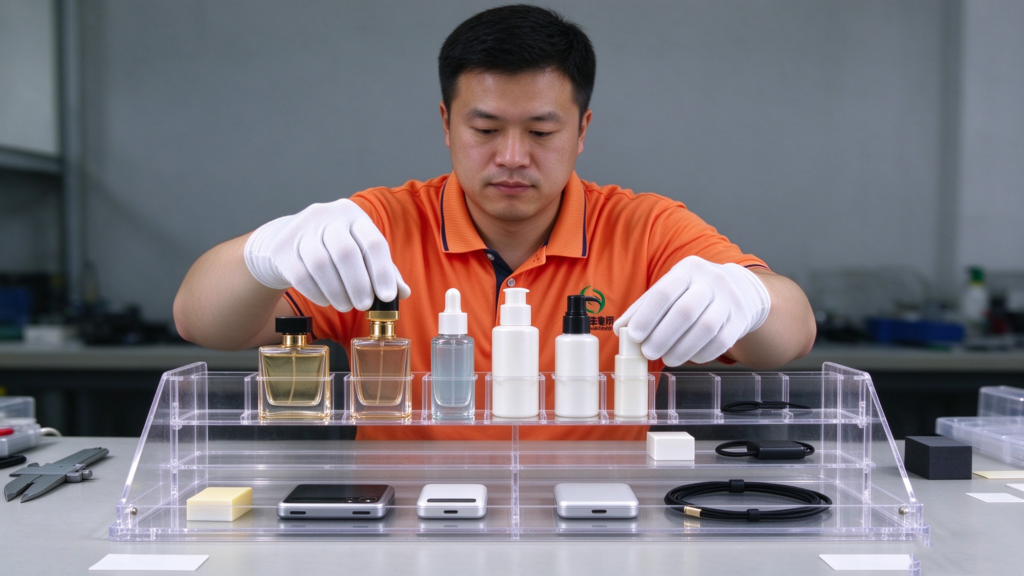
1. Confirm All Dimensions and Product Fit
One of the most common risks in custom display production is a mismatch between the display and the actual product.
A display may look attractive in a drawing or sample photo but fail to hold the product properly once it arrives.
Before approving the sample, check:
- Overall display width, height, and depth
- Slot, hole, and compartment dimensions
- Product clearance and removal space
- Base dimensions and stability
- Fit with the actual product or packaging
Whenever possible, test the sample using the actual products that will be displayed.
For example, a cosmetic display should accommodate the real bottle sizes, including any differences in packaging. A display for boxed products should leave enough room for customers to remove and replace items easily.
Buyer tip: Keep an approved dimension drawing alongside the sample approval record. Do not rely on photos alone.
2. Check Acrylic Material, Thickness, and Appearance
Not all acrylic displays have the same material requirements. Acrylic thickness, color, transparency, and surface finish can affect both appearance and performance.
During sample approval, confirm the following:
- Acrylic color and transparency
- Material thickness for each component
- Surface scratches or visible defects
- Edge finishing and polishing quality
- Any frosted, colored, or special surface effects
Pay attention to how the display looks under the lighting conditions where it will be used. A clear acrylic display in a retail store may look different under bright LED lighting than it does in a factory inspection area.
If your project includes multiple acrylic colors or finishes, specify them clearly in the approved drawings or specifications.
3. Verify the Logo and Printing Details
Logo problems can be especially costly because they may affect an entire production batch.
A logo that looks correct on a digital design may appear different after printing or engraving on acrylic. Its size, color, position, and visibility can all affect the final result.
Before approving the sample, check:
- Logo size and placement
- Brand colors and artwork accuracy
- Text spelling and font details
- UV printing, silk screen printing, or laser engraving effects
- Logo visibility against the acrylic background
For example, a white logo on clear acrylic may look subtle and elegant, while a full-color UV-printed logo can create a more promotional appearance.
If branding is important to your project, approve the actual logo effect on the physical sample rather than relying only on a computer rendering.
Buyer tip: Provide the final logo artwork and confirm the logo position before mass production. Late artwork changes can affect production schedules and costs.
4. Test Stability, Assembly, and Everyday Use
A display should do more than look good. It must also work properly in its intended environment.
Check whether the sample can support the expected product weight and whether its structure remains stable during normal use.
Important points include:
- Base stability and center of gravity
- Load-bearing areas and support structures
- Joint strength and connection methods
- Assembly steps and component alignment
- Ease of placing and removing products
If the display will be assembled by store staff, consider whether the process is simple and repeatable.
For displays with multiple components, confirm how the parts fit together and whether any protective film must be removed before use.
Testing should reflect the intended application. A lightweight countertop display and a tall display holding heavy products may require very different structural checks.
5. Confirm Packaging Before Mass Production
Packaging is sometimes overlooked during sample approval. Yet even a well-made acrylic display can arrive with scratches, broken parts, or damaged edges if it is not packed appropriately.
Before placing a bulk order, discuss:
- Protective film or other surface protection
- Individual product packaging
- Foam inserts or suitable cushioning
- Separation between components
- Carton size and packing arrangement
- Special requirements for shipping or warehouse handling
For export orders, packaging should be considered together with the display structure and shipping method.
If the display contains delicate parts or polished acrylic surfaces, ask the manufacturer how these areas will be protected during packing and transportation.
Where practical, request photos of the proposed packaging or a packing sample before the full shipment is prepared.
6. Create a Clear Sample Approval Record
A verbal confirmation such as “the sample looks good” can leave too much room for misunderstanding.
A better approach is to create a written approval record containing the key specifications.
| Item | What to Confirm |
|---|---|
| Dimensions | Approved drawing and measurements |
| Material | Acrylic type, thickness, color, and finish |
| Logo | Final artwork, size, color, and position |
| Structure | Assembly method and stability requirements |
| Quality | Acceptable appearance and workmanship |
| Packaging | Protection method and packing requirements |
| Order details | Quantity and approved product version |
Keep photos of the approved sample and make sure the drawing, artwork, and written specifications refer to the same version.
If you request a change after approval, ask the manufacturer to confirm whether it affects the sample, price, production schedule, or other specifications.
This creates a clearer reference for both parties when mass production begins.
7. Agree on Mass Production Quality Checks
Sample approval is only one part of quality management. Buyers should also understand how the manufacturer will check the bulk order.
Before production starts, discuss which requirements can be inspected and how issues will be handled.
Depending on the project, quality checks may include:
- Dimension and component checks
- Surface appearance and edge finishing
- Logo printing or engraving accuracy
- Assembly and stability tests
- Quantity verification
- Packaging and carton checks
For more complex orders, buyers may also agree on inspection timing, sample selection, inspection criteria, and how nonconforming products will be handled.
Do not assume that every detail will automatically be checked just because a sample has been approved. Confirm the quality requirements with your manufacturer in advance.
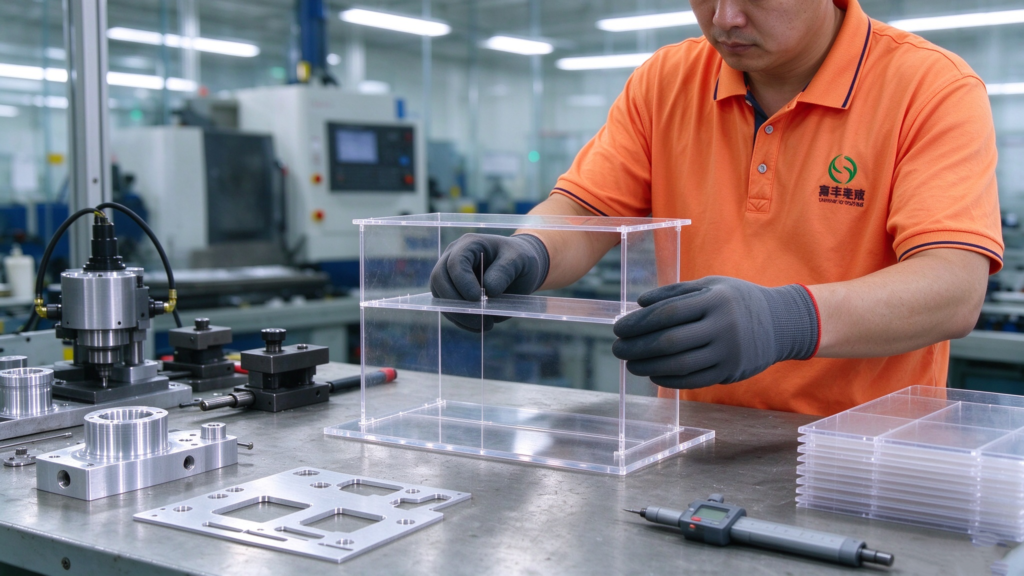
How MORICH Helps Buyers Prepare for Mass Production
At MORICH, custom acrylic display projects can involve 3D structural design, sample development, CNC machining, laser cutting, diamond polishing, logo customization, and assembly.
For applicable projects, sample development can help buyers review the display’s dimensions, structure, appearance, and branding before proceeding to bulk production.
To make the process more efficient, buyers can provide:
- Product photos and dimensions
- Display drawings or reference images
- Logo files and brand colors
- Expected order quantity
- Material and finish preferences
- Packaging and shipping requirements
If you do not have a finished design drawing, reference photos and actual product dimensions can still help start the discussion.
The more clearly the requirements are defined, the easier it is to identify potential problems before they affect a larger order.
Acrylic Display Sample vs Mass Production: Final Checklist
Before approving a sample and releasing a bulk order, make sure you can answer these questions:
Does the display fit the actual product?
Are the dimensions and material specifications confirmed?
Are the logo artwork, colors, and positions approved?
Has the structure been checked for stability and everyday use?
Have packaging and transportation requirements been discussed?
Is there a written record of the approved sample?
Have mass production quality checks been agreed upon?
If any important detail remains uncertain, clarify it before authorizing mass production.
Frequently Asked Questions
Does approving a sample guarantee that mass production will be identical?
Not by itself. Sample approval establishes a reference, but consistent production also depends on clear specifications, production controls, and appropriate quality checks.
Should buyers test the actual product in the acrylic display sample?
Yes, whenever possible. Testing the real product helps verify fit, clearance, stability, and ease of use more accurately than checking dimensions alone.
What should buyers do if they need to change the design after sample approval?
Inform the manufacturer before mass production begins. Confirm whether the change requires a revised drawing, another sample, additional costs, or a schedule adjustment.
When should packaging be confirmed?
Ideally, packaging requirements should be discussed during the sample and quotation stages, especially for displays with delicate surfaces, multiple components, or export shipping requirements.
Final Thoughts
The key to managing acrylic display sample vs mass production is to treat sample approval as a documented decision, not simply a visual check.
By confirming dimensions, materials, branding, structure, packaging, and inspection requirements in advance, buyers can reduce avoidable misunderstandings and make the transition to mass production more predictable.
Planning a custom acrylic display project? Contact MORICH with your product dimensions, reference images, logo artwork, and expected quantity to discuss a suitable design and sampling plan.