

How to Request an Acrylic Display Quote: 8 Easy Steps
If you want to request an acrylic display quote, you do not always need a complete technical drawing. Many custom display projects begin with a product photo, a few measurements, or an example of a display you like.
However, the more information you provide, the easier it is for a manufacturer to understand your requirements and prepare a suitable quotation.
For retailers, brand owners, distributors, and purchasing managers, preparing the right information at the beginning can reduce unnecessary communication, clarify costs, and help move a project toward sampling and mass production.
In this guide, we explain eight important things to prepare before requesting a quote for a custom acrylic display.
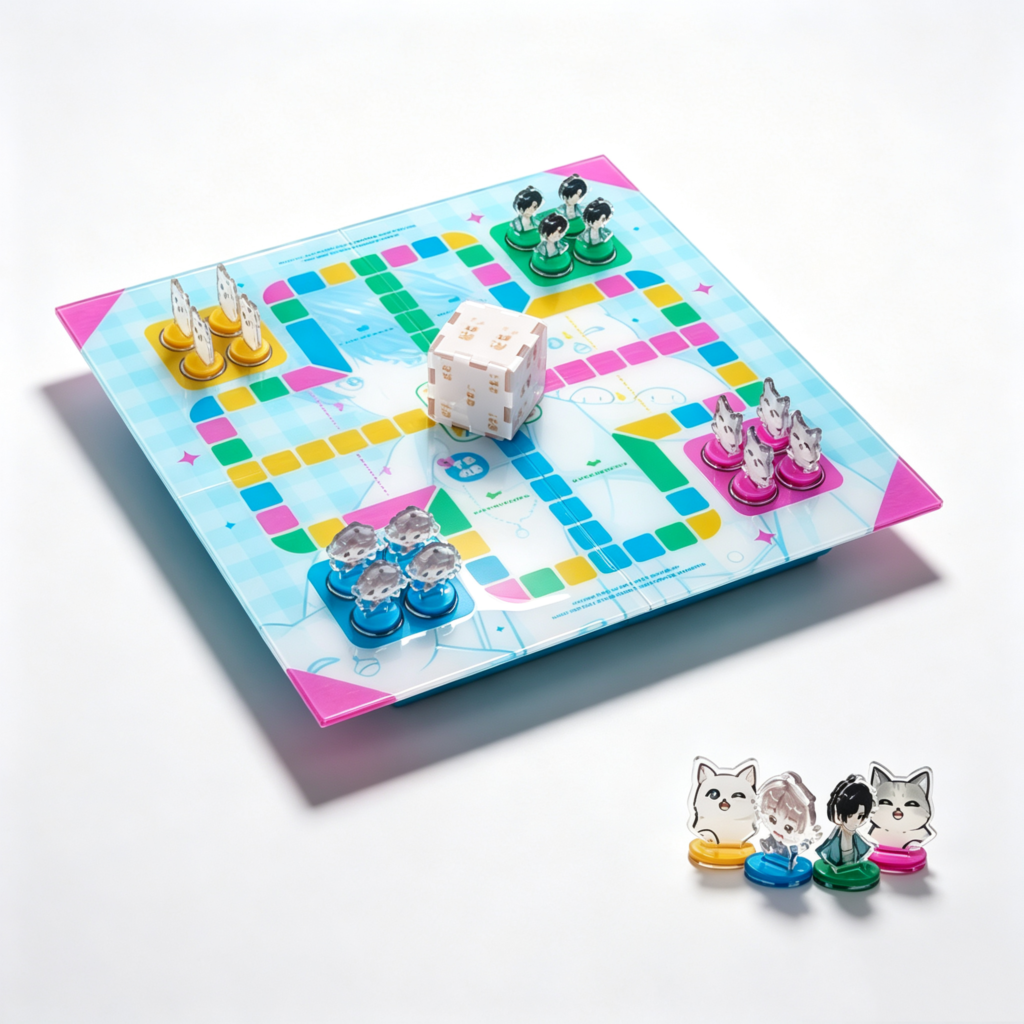
1. Provide Photos or Design References
The first step is to show the manufacturer what you want to create.
You can provide a reference photo, a competitor’s display, a hand-drawn sketch, a 3D rendering, or an existing sample.
Your reference does not need to show every detail. Its purpose is to communicate the general appearance, structure, and intended use of the display.
For example, if you need a countertop cosmetics display, a reference image can help explain whether you want multiple product levels, individual compartments, a branded back panel, or a simple transparent stand.
If you have several reference images, explain which features you like in each one.
Buyer tip: A reference photo is a starting point, not necessarily a final production specification. Confirm that the manufacturer understands which features must be followed and which can be adjusted.
2. Share Your Product Dimensions
Your display needs to fit the products it will hold. That is why product dimensions are often more useful than an approximate display size alone.
Prepare the following information where applicable:
Product width, height, and depth
Product weight
Packaging dimensions, if boxed products will be displayed
Number of products to display at one time
Any special requirements for product removal or replacement
If your product comes in different sizes, provide the dimensions of each version.
For example, a skincare display designed for three bottle sizes may need different compartment widths or shelf heights to accommodate all of them.
If possible, provide actual product samples or clear photographs with measurements. This can help the manufacturer assess fit and identify potential design issues before sampling.
3. Explain the Display’s Overall Size and Structure
If you already know the required display dimensions, include them in your inquiry.
Useful measurements include:
Overall width, height, and depth
Number of shelves or product compartments
Height between shelves
Base dimensions
Header or back-panel size
Available countertop or floor space
If you do not know the ideal dimensions, explain where the display will be used and how many products it should hold.
A display for a small checkout counter has different space requirements from a large retail display.
A manufacturer may be able to suggest a suitable structure based on your product size, quantity, available space, and visual preferences.
The goal is not to finalize every measurement before asking for a quote. It is to provide enough information for a meaningful discussion.
4. Specify the Logo and Branding Requirements
Branding can affect the display’s appearance, production process, and overall cost.
When requesting an acrylic display quote, explain whether you need a logo or other printed graphics.
If available, provide:
Your logo file
Brand colors
Preferred logo size
Logo position
Text or promotional artwork
Reference images showing the desired effect
Different logo methods create different results.
For example, UV printing can reproduce colorful graphics, while laser engraving can create a more subtle, frosted effect on suitable acrylic surfaces. Silk screen printing may also be appropriate for certain designs and production requirements.
If you are unsure which method to choose, tell the manufacturer what visual effect you want and ask for a recommendation.
You do not need to select a production process before explaining your branding goals.
5. Describe the Acrylic Color, Finish, and Other Materials
Acrylic displays can be designed in different colors and finishes, and these choices influence the final appearance.
Consider whether you prefer:
Clear acrylic for a transparent, minimalist look
White or black acrylic for stronger visual contrast
Colored acrylic to match your brand
Frosted acrylic for a softer appearance
Polished edges for a clean finish
A combination of acrylic with wood or other materials
You do not need to specify every technical detail if you are not familiar with the materials.
Instead, provide a reference image and explain the appearance you want to achieve.
For example, you might request a transparent cosmetics display with polished edges and a white printed logo.
A clear description of the desired appearance helps the manufacturer recommend a suitable construction and finishing method.
6. Confirm the Order Quantity and Sampling Requirements
Order quantity is an important part of an acrylic display quotation.
Tell the manufacturer whether you need a prototype, a small initial order, or a larger production run.
For example, you may be planning:
One sample for design evaluation
A small batch for a product launch
Displays for several retail stores
A repeat order for an established product
If you need a sample before mass production, mention this in your initial inquiry.
You should also clarify whether the sample cost is quoted separately, whether any sample fee can be credited toward a future order, and whether the sample and bulk production will use the same approved specifications.
Do not assume that sample fees, production costs, and delivery charges are automatically included in one price. Ask the manufacturer to clarify what the quotation covers.
7. Explain Your Packaging and Shipping Requirements
A quotation should reflect how the finished displays need to be packed and delivered.
Tell the manufacturer where the goods will be shipped and whether you have any special packaging requirements.
Relevant details may include:
Individual protective packaging
Retail-ready packaging
Custom packaging with branding
Bulk carton packing
Delivery to a warehouse or fulfillment center
Required delivery terms, such as EXW, FOB, or DAP
For example, displays intended for individual retail stores may require different packaging from displays shipped in bulk to a distribution warehouse.
If you are comparing quotations from multiple manufacturers, make sure you are comparing similar delivery terms and packaging arrangements.
A lower product price does not necessarily mean a lower total purchasing cost if the packaging, freight, or other charges differ.
8. Ask for a Detailed Quotation
Once the manufacturer understands your project, ask for a quotation that clearly identifies what is included.
Depending on the project, the quotation may cover:
Product unit price
Sample or prototype cost
Tooling or other project-specific charges, if applicable
Logo printing or other customization
Packaging costs
Estimated production lead time
Shipping costs or delivery terms
Payment terms and quotation validity
Not every project will have the same cost items. For many custom acrylic displays, production can use cutting, machining, polishing, printing, and assembly processes without requiring a dedicated mould.
If a quotation includes additional charges, ask what they cover and whether they are one-time or recurring costs.
When comparing suppliers, review the specifications as well as the price. Two quotations are only meaningfully comparable when the product design, materials, quantity, finishing, packaging, and delivery requirements are aligned.
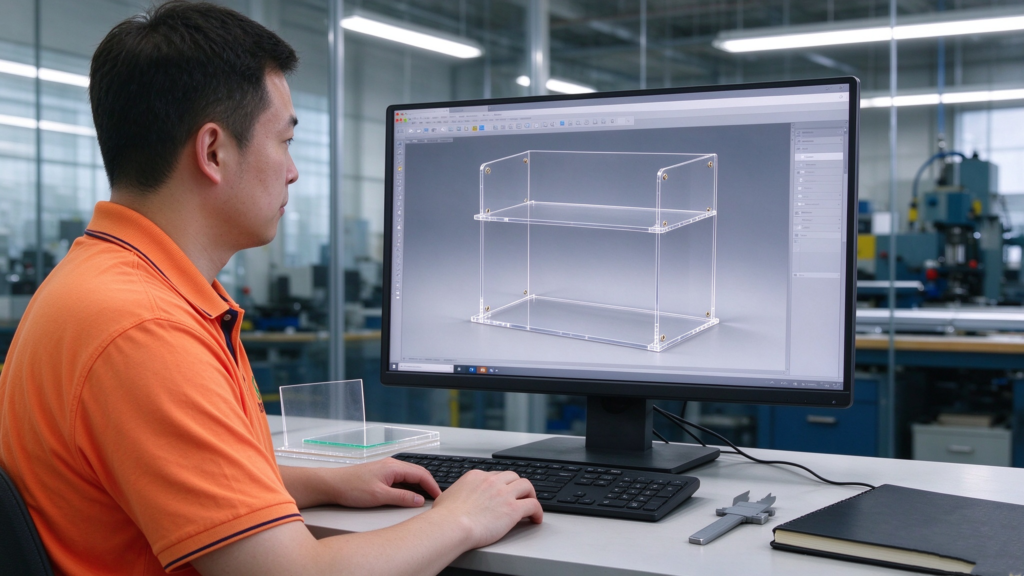
What If You Don’t Have a Design Drawing?
You can still request an acrylic display quote without a finished technical drawing.
Start with these four things:
A photo of your product or its packaging.
A reference image of the display style you prefer.
The product dimensions and the approximate number of items to display.
A short explanation of where the display will be used and what branding you need.
For example, you could tell the manufacturer:
“I need a countertop acrylic display for six skincare bottles. Each bottle is approximately 50 mm wide and 120 mm high. I prefer clear acrylic with a white logo on the front. The display will be used in retail stores, and I would like to review a sample before mass production.”
This gives the manufacturer a useful starting point without requiring you to design the entire product yourself.
The manufacturer can then discuss possible structures, confirm missing details, and determine what additional information is needed for a more accurate quotation.
How MORICH Supports Custom Acrylic Display Projects
At MORICH, custom acrylic display projects can involve 3D structural design, sample development, CNC machining, laser cutting, diamond polishing, logo customization, and assembly.
You can begin by sharing your product photos, dimensions, reference designs, branding requirements, and estimated order quantity.
If you do not have a complete drawing, these materials can help start the design discussion. The appropriate design and sampling approach will depend on your project’s complexity and requirements.
To help us understand your project, please include:
Product name and intended application
Product dimensions and weight
Preferred display style
Logo artwork and color requirements
Estimated order quantity
Sampling requirements
Packaging and shipping destination
With a clear starting brief, both sides can discuss the design, quotation, and next steps more efficiently.
Request an Acrylic Display Quote: Final Checklist
Before sending your inquiry, check that you have prepared as much of the following information as possible.
Product photos or reference images
Product dimensions and weight
Approximate display dimensions or available space
Number of products to display
Logo artwork and branding requirements
Preferred acrylic color and finish
Estimated sample and bulk quantities
Packaging and shipping requirements
You can still send an inquiry if some details are missing. Clearly identify what you already know and what you would like the manufacturer to help you determine.
Frequently Asked Questions
Can I get a quote without a technical drawing?
Yes. Product photos, reference images, product dimensions, and a clear description of your requirements can provide a starting point. The manufacturer may need additional details before confirming a final price.
Does the quotation include the sample cost?
Not always. Sample fees may be quoted separately from bulk production. Ask the manufacturer to clarify sample charges and any applicable credit toward a subsequent order.
Why do quotations from different manufacturers vary?
Prices can differ because of materials, dimensions, structural design, finishing, printing, order quantity, packaging, and delivery terms. Compare the complete specifications rather than the unit price alone.
Should I request a sample before placing a bulk order?
For a new or complex custom display, a sample can help verify dimensions, appearance, branding, assembly, and product fit before mass production. Confirm the sample requirements and approval process with your manufacturer.
What is the most important information to provide first?
Start with the product dimensions, reference images, intended use, estimated quantity, and logo requirements. These details help the manufacturer understand the project and identify the next questions that need to be answered.
Final Thoughts
Knowing how to request an acrylic display quote can make the purchasing process more efficient, even if you do not have a finished design.
Start with your product, explain the display you need, share your branding requirements, and clarify your quantity, sampling, packaging, and shipping plans.
A good quotation should be based on a clear understanding of the project, not just a rough product description.
Ready to develop a custom acrylic display? Contact MORICH with your product photos, dimensions, reference images, and estimated quantity to discuss your project and request a quotation.