
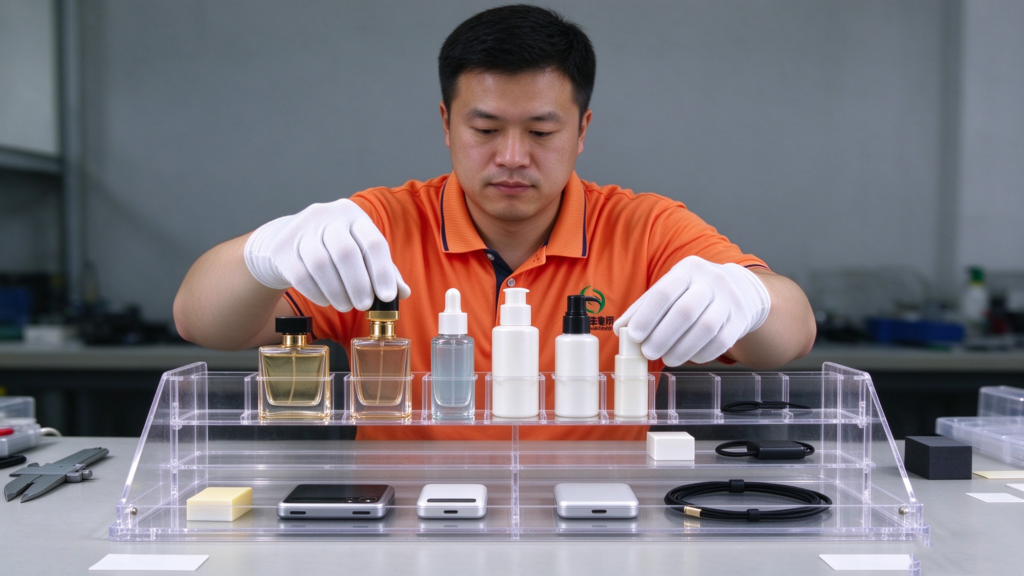
A stable acrylic display stand does more than hold products. It helps retailers present merchandise safely, keeps shelves organized, and creates a better shopping experience. If a display tips over, wobbles, or cannot support the intended products, even an attractive design can become a problem.
For brands and buyers ordering custom acrylic displays, stability should be considered from the beginning—not after the first sample arrives.
In this guide, MORICH explains seven important design factors to consider before ordering a custom acrylic display stand.
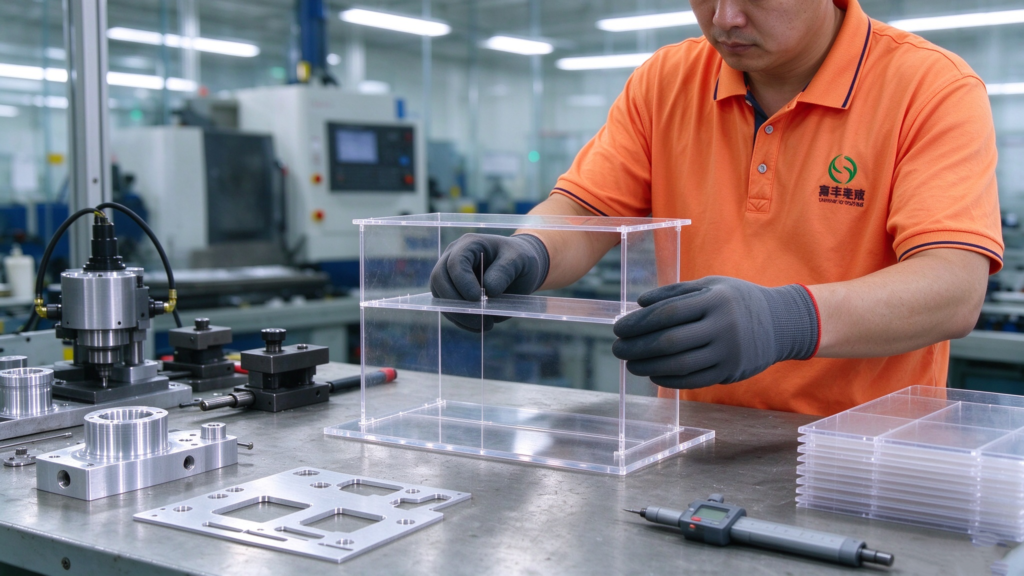
1. Match the Base Size to the Product
The base is one of the most important parts of a stable display. A narrow or shallow base may not provide enough support, especially when products are tall or positioned near the edge.
When planning your display, consider:
The overall height and width of the display.
The size and weight of the products being displayed.
Where customers will place or remove products.
How much shelf or countertop space is available.
A wider base can improve stability, but making it unnecessarily large may waste valuable retail space. The goal is to find the right balance between footprint, appearance, and support.
For multi-tier displays, consider how the upper shelves affect the overall structure and where the heaviest products will be placed.
2. Consider the Center of Gravity
The center of gravity affects how easily a display can tip over. A tall display with heavy products near the top is generally more challenging to stabilize than a lower display with the weight distributed near its base.
To improve stability:
Place heavier products on lower shelves when the product layout allows.
Avoid concentrating too much weight on one side.
Keep frequently handled products in positions that do not require customers to pull them from the top of a tall structure.
Review the display with the actual products or representative weights before approving the final design.
For example, a tall cosmetics display holding lightweight lip products may need a different structure from one holding heavier glass perfume bottles.
The display should be evaluated as a complete system, including the acrylic structure, products, shelves, and any accessories.
3. Choose the Appropriate Acrylic Thickness
Acrylic thickness affects rigidity, weight, appearance, and cost. However, thicker acrylic does not automatically guarantee a stable display.
The correct thickness depends on several factors, including panel dimensions, unsupported spans, product loads, connection methods, and the intended use environment.
When selecting materials, consider:
Panel size: Large panels may need additional structural support.
Shelf span: Long shelves can flex under excessive loads.
Load distribution: Concentrated weight can create more stress than evenly distributed weight.
Connection design: Joints and supports must be suitable for the expected load.
Avoid choosing acrylic thickness based on appearance alone. A well-designed structure using appropriately sized panels and supports may perform better than a poorly designed structure made entirely from thicker sheets.
For more guidance, read our article on Acrylic Thickness for Display Stands. Confirm the published URL before adding the link to your website.
4. Design Strong Shelves and Connections
Shelves, joints, slots, and supporting panels all influence the performance of an acrylic display.
A shelf that extends too far without support may bend under the weight of the products. Poorly designed joints may loosen or fail during repeated use, transportation, or assembly.
When developing your design, pay attention to:
The distance between supporting panels.
The size and position of slots and joints.
The method used to connect acrylic components.
The load each shelf is expected to carry.
The number of times the display will be assembled or handled.
For multi-level displays, vertical panels can sometimes serve as both visual dividers and structural supports. This approach can help maintain a clean appearance while supporting the shelves.
Your manufacturer should assess the structure based on the intended load and use conditions rather than relying on appearance alone.
5. Think About How Customers Handle Products
Retail displays are used by real people, not just photographed for a product catalog. Customers may lift products, return them to the wrong position, or pull items forward when browsing.
A display that remains stable under static conditions may still move during everyday use.
Before finalizing the design, consider:
Whether customers can remove products without pulling the display forward.
Whether the front edge provides enough space to grip products.
Whether frequently accessed products are easy to reach.
Whether the display is likely to slide on a smooth countertop.
Whether any sharp corners or awkward protrusions could interfere with use.
Depending on the application, suitable non-slip pads or other support features may help reduce movement. Their effectiveness should be checked on the actual surface where the display will be used.
The best design balances stability with easy product access and a convenient shopping experience.
6. Evaluate Stability During Transportation and Installation
A display that works well on a factory workbench may behave differently after shipping or installation.
Transportation can expose products to vibration, impact, and repeated handling. Displays with removable components may also be assembled incorrectly if the structure is not intuitive.
To reduce these risks:
Design joints and connections with assembly requirements in mind.
Confirm whether the display will ship assembled, partially assembled, or flat-packed.
Check that removable shelves or components fit securely.
Provide clear assembly instructions when needed.
Evaluate the assembled display on a level surface before use.
If the display will be installed in a retail store, confirm the available countertop dimensions and any restrictions on height or footprint before production.
Stability, packaging, and assembly should be considered together because a successful display must arrive in usable condition and perform as intended.
7. Test the Display With the Actual Products
A design drawing can communicate dimensions and structure, but it cannot fully demonstrate how a display will behave in everyday use.
Before approving mass production, test a representative sample with the intended products whenever possible.
Check the following points:
Does the display remain upright when fully loaded?
Do shelves show excessive bending?
Does the display move when products are removed?
Are products positioned securely and presented at the correct angle?
Can staff restock the display easily?
Do all joints and connections remain secure during normal handling?
For higher-risk applications, establish appropriate load and stability acceptance criteria before testing. Avoid placing excessive loads on a sample without an agreed test method.
If the display will hold heavy, fragile, or expensive products, a more thorough engineering review may be necessary.
Testing early gives your team an opportunity to adjust the structure before committing to a larger production quantity.
How MORICH Develops Custom Acrylic Displays
Every display project has different requirements. A countertop cosmetics stand, a jewelry display, and a multi-tier retail organizer may need different structural solutions even when they use similar acrylic materials.
MORICH supports custom display projects through design coordination, sample development, CNC machining, laser cutting, edge polishing, printing, and assembly. These capabilities help turn a product concept into a finished display tailored to the intended application.
Explore our custom acrylic commercial displays to learn more about our display solutions, or visit our manufacturing capabilities page to review our production services.
When requesting a custom display, provide as much information as possible about product dimensions, individual product weight, expected quantity, display location, and preferred design. These details help the manufacturing team evaluate the structure more effectively.

Frequently Asked Questions
What makes an acrylic display stand stable?
A stable acrylic display stand combines an appropriate base, suitable material thickness, well-designed supports and connections, and a balanced product load. Stability depends on the complete design rather than any single feature.
Does thicker acrylic always make a display more stable?
No. Thicker acrylic can improve rigidity in some applications, but the base dimensions, panel spans, joint design, and weight distribution also matter. Material selection should match the specific structure and expected load.
How can I prevent a tall acrylic display from tipping over?
Consider a sufficiently wide base, keep heavier products lower where practical, avoid uneven loading, and evaluate the fully loaded display under realistic conditions. The appropriate solution depends on the display’s height, footprint, and intended use.
Should I test a custom acrylic display before mass production?
Yes. A sample review helps identify potential problems with stability, fit, product access, assembly, and appearance before a larger order is produced. Test the sample using the intended products or representative weights.
Can MORICH customize an acrylic display for my products?
MORICH provides custom acrylic display manufacturing support. Share your product dimensions, weight, reference images or drawings, desired quantity, and application details so the team can evaluate your requirements.
Final Thoughts
A well-designed stable acrylic display stand should support the products securely, make merchandise easy to access, and fit naturally into the retail environment.
By considering base size, center of gravity, acrylic thickness, shelf support, customer handling, transportation, and practical testing, buyers can reduce avoidable design problems before mass production.
Planning these details early helps create a display that looks professional and performs reliably in its intended setting.
Planning a custom acrylic display? Contact MORICH with your product details and design ideas to discuss a suitable display solution.