
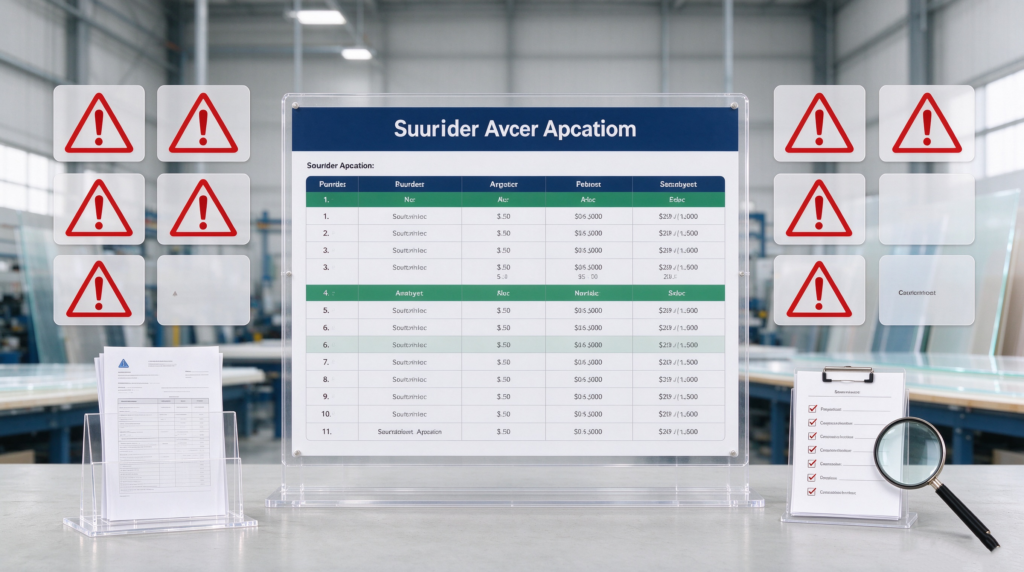
Choosing the right custom acrylic display manufacturer is about more than finding the lowest quotation. Your supplier needs to understand your product, turn your ideas into a practical design, maintain consistent quality, and deliver displays that meet your requirements.
For brand owners, retailers, distributors, and purchasing managers, choosing the wrong supplier can lead to repeated sampling, unexpected costs, production delays, or displays that do not fit the products they are designed to hold.
So, how can you evaluate a manufacturer before placing an order?
This guide explains nine practical checks to help you assess a potential supplier and make a more informed purchasing decision.

1. Check Whether the Manufacturer Understands Your Application
A reliable custom acrylic display manufacturer should understand what the display needs to accomplish, not just how it should look.
A cosmetics display, for example, may need to accommodate several bottle sizes, highlight a brand logo, and fit within a limited countertop space. A display for electronics may require precise compartments, cable openings, or additional support for heavier products.
Before discussing the final design, a manufacturer should be willing to understand:
The products the display will hold
Product dimensions and weight
The number of items to display
Where the display will be used
Your branding and visual requirements
Any space or installation limitations
These details influence the structure, dimensions, material selection, and finishing process.
Buyer tip: During your first conversation, explain the intended application and observe whether the supplier asks relevant technical questions. A quotation based on incomplete information may not reflect what you actually need.
2. Review the Manufacturer’s Relevant Product Experience
A supplier may have experience processing acrylic, but that does not automatically mean it is experienced in producing your type of finished display.
Look for examples that are relevant to your project.
For example, if you need a multi-tier cosmetics display, ask to see similar products featuring shelves, branded panels, polished edges, or printed graphics.
If your project combines acrylic with wood or other materials, check whether the manufacturer has experience handling those materials together.
When reviewing a portfolio, pay attention to:
Similar product structures
Comparable dimensions and complexity
Surface finishing and edge quality
Logo printing and customization
Assembly details
The overall consistency of finished products
Product photographs can help you understand a supplier’s experience, but they are only one part of the evaluation. For important projects, discuss the actual manufacturing requirements and consider requesting a sample.
3. Evaluate Design and Engineering Support
Not every buyer has a complete technical drawing ready when starting a custom display project.
Sometimes, you may only have a product photograph, a reference display, a rough sketch, or an idea of how the finished product should look.
A capable custom acrylic display manufacturer should be able to discuss how that concept could become a manufacturable design.
Depending on the project, design support may include:
Reviewing dimensions and product fit
Developing a suitable display structure
Planning shelf positions and compartments
Considering stability and assembly
Selecting appropriate materials and finishes
Identifying potential production difficulties before sampling
Good design support can also help avoid unnecessary complexity.
For example, a display may look attractive in a rendering but contain too many separate components or difficult-to-assemble features. Reviewing these details early can help balance appearance, function, and production cost.
If you do not have a complete drawing, ask the supplier what information is needed to begin design development.
4. Confirm the Available Manufacturing Processes
The production processes available to a manufacturer influence which designs it can produce and how the finished display will look.
For custom acrylic displays, relevant capabilities may include laser cutting, CNC machining, diamond edge polishing, drilling, printing, engraving, and assembly.
Different projects require different combinations of processes.
For example:
A transparent display may require carefully finished visible edges.
A branded cosmetics stand may need UV-printed graphics.
A display with a subtle logo effect may use laser engraving.
A multi-part structure may require accurate machining and assembly.
If your project combines acrylic with wood or other materials, ask how the manufacturer coordinates the different components and finishing requirements.
You should also clarify which processes are performed in-house and which are outsourced when this distinction affects quality, lead time, or project management.
A long equipment list alone does not prove that a supplier is suitable. What matters is whether its manufacturing capabilities match your specific product requirements.
5. Ask How Samples Are Reviewed and Approved
Sampling is an important stage in developing a new custom display.
A sample allows you to evaluate the physical product rather than relying entirely on drawings, descriptions, or digital renderings.
Before approving a sample, review the details that matter to the final application:
Overall dimensions and product fit
Acrylic color and thickness
Edge finish and visible surfaces
Logo size, position, and appearance
Stability and assembly
Packaging requirements, where relevant
You should also ask how the approved sample will be used as a reference for mass production.
For example, will the final specifications be documented? Will the approved artwork and material requirements be retained? How will any changes requested after sampling be confirmed?
A clear approval process helps both sides understand what has been agreed.
For more detail, read our guide to Acrylic Display Sample vs Mass Production.
6. Understand the Manufacturer’s Quality Control Process
Quality control should cover more than checking whether the finished display looks acceptable.
The relevant inspection points depend on the product design and your requirements, but they may include dimensional accuracy, surface appearance, logo placement, assembly, and packaging.
Ask the manufacturer how it checks these characteristics and what happens if a problem is identified.
Useful questions include:
Which dimensions are checked during production?
How are visible scratches and surface defects assessed?
How is printing or engraving checked against the approved artwork?
How are assembly and stability requirements verified?
How are defective parts identified and handled?
What records or inspection photos can be provided when needed?
For larger orders, it is helpful to agree on the important acceptance criteria before production begins.
For example, simply requesting a “good-quality acrylic display” leaves room for different interpretations. Specifying the required dimensions, finish, logo position, and other critical characteristics creates a clearer basis for inspection.
The objective is to make quality expectations measurable wherever practical.
7. Compare Quotations Based on the Same Specifications
A lower quotation does not necessarily represent a better purchasing decision.
Prices may vary because of material thickness, design complexity, finishing, printing, quantity, packaging, or shipping arrangements.
Before comparing suppliers, make sure each quotation covers the same requirements.
Review the following details:
Product dimensions and structure
Acrylic specifications and color
Logo method and artwork
Required finishing and assembly
Sample charges and project-specific fees
Packaging method and quantity per carton
Production lead time
Delivery terms and shipping costs
Also clarify whether any additional charges may apply after the design is finalized.
For many acrylic display projects, suitable production methods can be used without a dedicated mould. A supplier should explain whether any proposed tooling or project-specific charge is necessary for your particular design.
Our guide to Custom Acrylic Display Quotes explains the main factors that influence pricing.
8. Evaluate Communication and Project Management
Even a manufacturer with suitable equipment can become difficult to work with if project communication is unclear.
Custom display projects often involve several stages: inquiry, design discussion, quotation, sampling, approval, production, inspection, and shipping.
At each stage, you need to know what has been confirmed, what information is still missing, and what happens next.
During your initial discussions, consider whether the supplier:
Answers technical questions clearly
Identifies missing specifications
Confirms changes in writing
Communicates sample and production schedules
Explains potential risks or limitations
Provides updates when agreed milestones are reached
Pay particular attention to how the supplier handles problems.
A realistic explanation of a production limitation is often more useful than an immediate promise that every request can be completed without difficulty.
Clear communication helps reduce misunderstandings, especially when the buyer and manufacturer are in different countries and time zones.
9. Verify Packaging, Shipping, and Repeat-Order Capability
A successful manufacturing project does not end when the displays leave the production line.
The finished products must also be packed appropriately, shipped according to the agreed arrangements, and delivered in a condition suitable for their intended use.
Ask how the manufacturer plans to protect visible acrylic surfaces, polished edges, and vulnerable components during transportation.
Depending on the project, you may also need to confirm carton dimensions, units per carton, gross weight, labeling requirements, and whether displays will ship assembled or disassembled.
If you expect repeat orders, ask how the supplier maintains consistency between production batches.
For example, it is useful to know whether approved drawings, artwork, material specifications, and packaging requirements can be retained for future orders.
Repeat-order consistency is particularly important for brands supplying multiple retail stores or maintaining the same display design over an extended period.
You can also read our guide to Acrylic Display Packaging for practical considerations when preparing displays for shipment.
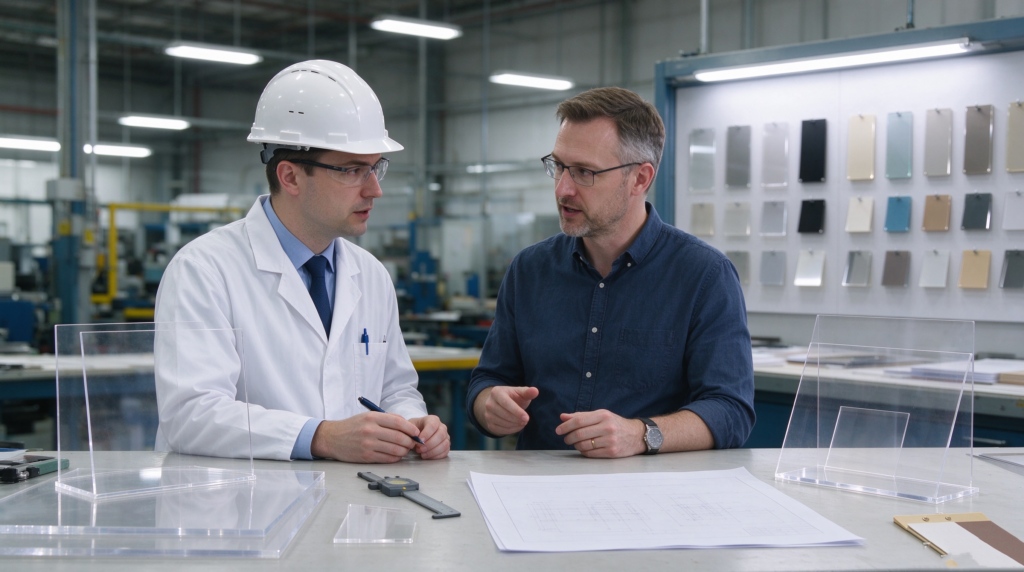
Questions to Ask Before Choosing a Custom Acrylic Display Manufacturer
Before making your decision, use these questions to guide your supplier evaluation:
Have you produced similar acrylic displays before?
Can you help develop the design if I do not have a complete drawing?
Which manufacturing and finishing processes are available?
What information do you need to prepare an accurate quotation?
How do you review and approve samples?
How do you maintain consistency between samples and mass production?
What quality checks are performed?
What packaging and shipping options can you support?
How do you handle design changes, production issues, and repeat orders?
You do not need every answer before starting a conversation. However, the supplier should be willing to discuss the questions that are relevant to your project.
How MORICH Supports Custom Acrylic Display Projects
MORICH develops custom finished acrylic displays for retail, branding, and product presentation applications.
Depending on the project, our capabilities can include 3D structural design, sample development, CNC machining, laser cutting, diamond edge polishing, logo customization, and assembly.
We understand that buyers need more than an attractive display. They also need a design that fits the products, specifications that can be confirmed before production, and packaging appropriate for the intended shipment.
To start discussing a project with MORICH, prepare the following information where available:
Product photos or reference designs
Product dimensions and weight
Approximate display dimensions
Number of products to be displayed
Logo artwork and preferred branding effects
Estimated order quantity
Sampling requirements
Packaging and shipping destination
If you do not have a finished technical drawing, you can still begin with a reference image and a description of your requirements.
The next steps can then be discussed based on the complexity and specifications of your project.
Visit our Manufacturing Capabilities page to learn more about our production services, or contact MORICH to discuss a custom display project.
Frequently Asked Questions
How do I know if a custom acrylic display manufacturer is reliable?
Review relevant product experience, manufacturing capabilities, communication quality, sample approval procedures, and quality control practices. For important orders, request a physical sample and agree on the specifications before mass production.
Can a manufacturer develop a display without my technical drawing?
Many custom display projects can begin with product photos, reference images, dimensions, and a description of the intended use. The manufacturer can then identify what additional information is needed to develop the design.
Should I choose the manufacturer with the lowest quotation?
Not necessarily. Compare materials, structure, finishing, branding, quality requirements, packaging, and delivery terms. A lower price may reflect different specifications or services.
Why should I approve a sample before mass production?
A sample allows you to check product fit, dimensions, appearance, branding, and assembly before committing to a larger order. It also provides a reference for confirming the agreed production specifications.
What should I check before placing a repeat order?
Confirm that the approved design, materials, artwork, dimensions, finishing, and packaging requirements remain unchanged. If any specification has changed, document and approve the revision before production.
Final Thoughts
Choosing a custom acrylic display manufacturer requires more than comparing prices or browsing product photos. You need to evaluate design support, manufacturing processes, sample approval, quality control, communication, and shipping arrangements together.
A structured evaluation helps you identify a supplier that fits your product requirements and purchasing goals.
Looking for a custom acrylic display manufacturer? Contact MORICH with your product photos, reference designs, estimated quantity, and branding requirements to discuss your project and request a quotation.