
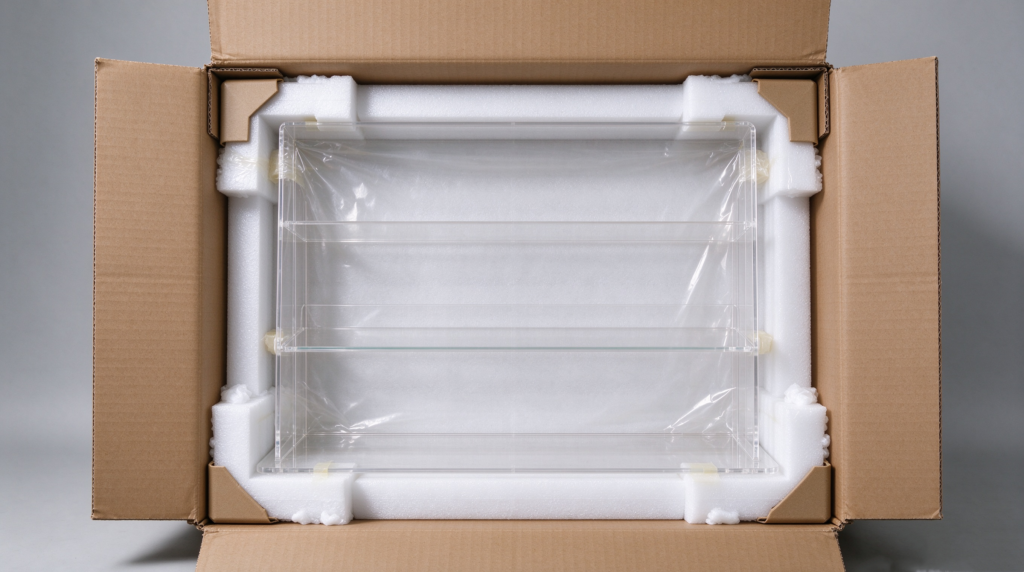
Acrylic display packaging plays an important role in protecting custom displays during storage, handling, and transportation. Even a well-designed acrylic display can arrive with scratches, broken components, or damaged edges if the packaging does not match the product’s structure.
For retailers, brand owners, distributors, and purchasing managers, shipping damage can lead to replacement costs, delayed product launches, and additional communication with suppliers.
The right packaging depends on the display’s dimensions, structure, surface finish, and shipping method. In this guide, we explain seven practical ways to improve acrylic display packaging and reduce avoidable shipping risks.
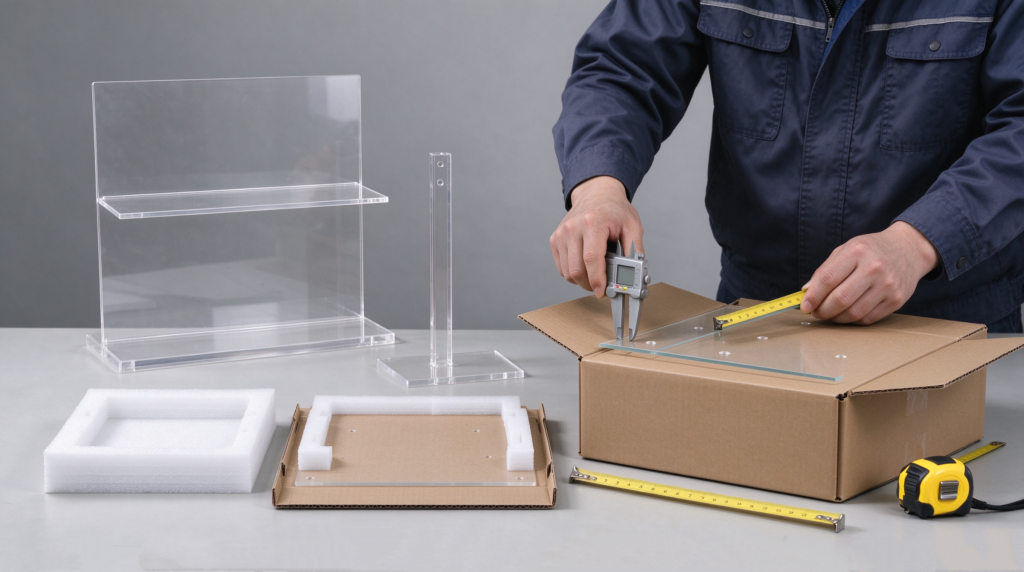
1. Protect Acrylic Surfaces from Scratches
Scratches are among the most noticeable problems with transparent acrylic displays. Marks on clear panels can affect the overall appearance, especially when the display is intended for cosmetics, jewelry, electronics, or premium retail products.
Acrylic display packaging should protect visible surfaces from friction and contact with other components.
Depending on the product, suitable protective measures may include:
Keeping protective film on surfaces where appropriate.
Using clean, non-abrasive protective wrapping.
Separating individual acrylic panels to prevent rubbing.
Preventing screws, metal fittings, and other hard components from contacting visible surfaces.
Checking that packaging materials do not leave residue or damage the finish.
Packaging should also be handled with clean hands and stored in a clean environment before assembly.
For displays with polished edges, transparent panels, or glossy surfaces, discuss the protection method with your manufacturer before bulk production.
The objective is to keep the display looking as intended when it reaches the customer, not simply to cover the product with packaging material.
2. Protect Edges, Corners, and Fragile Components
Acrylic displays may have flat panels, projecting headers, narrow shelves, product slots, or assembled joints. Some areas are more vulnerable to impact than others.
Edges and corners deserve particular attention because concentrated impact during handling can cause chipping or cracking.
Consider these packaging measures:
Add suitable cushioning around vulnerable corners.
Prevent the display from moving freely inside its packaging.
Protect projecting parts and narrow components from bending or impact.
Separate loose accessories and hardware from visible acrylic surfaces.
Provide additional protection for unusually shaped or delicate structures.
The appropriate cushioning material depends on the product design and shipping conditions.
For example, a simple acrylic riser may need less complicated packaging than a large countertop display with several shelves and an extended header.
Packaging should follow the actual shape of the product. Using the same packing method for every display may leave some components insufficiently protected.
3. Choose Packaging Based on the Display Structure
Not every acrylic display should be packed in the same way.
A fully assembled display can be convenient for the customer, but its projecting parts may require additional protection. A flat-packed display can reduce shipping volume, but it needs suitable separation, clear identification, and assembly instructions where necessary.
When choosing a packaging method, consider:
Overall display dimensions.
Product weight and center of gravity.
Number of individual components.
Whether the display ships assembled or disassembled.
The presence of shelves, slots, brackets, or projecting parts.
How the customer will unpack and use the display.
For a multi-component display, individual parts may need to be wrapped and separated before being placed in the outer carton.
For an assembled display, the packaging should support the structure without putting excessive pressure on delicate areas.
If assembly is required after delivery, confirm that the necessary fittings and instructions are included and that the packaging keeps the components organized.
A suitable packaging design should protect the product while making unpacking and installation as straightforward as possible.
4. Use Inner Protection and a Suitable Outer Carton
Effective acrylic display packaging usually involves more than one layer of protection.
The inner packaging helps separate and cushion the display, while the outer carton provides a protective enclosure for handling and transportation.
Depending on the product, the packaging system may include:
Protective film or wrapping.
Foam or other suitable cushioning materials.
Inner cartons or compartment separators.
An appropriately sized outer carton.
Additional reinforcement for heavier or more fragile products.
The carton should provide enough space for protective materials without allowing the display to move excessively.
However, an oversized carton is not automatically safer. If the product can shift inside the package, it may experience repeated impacts during transportation.
Likewise, excessive pressure from tightly packed materials can damage delicate components.
The goal is to create a balanced packaging structure that keeps the display secure without placing unnecessary stress on the acrylic.
For larger shipments, the supplier should also consider carton stacking, handling conditions, and the requirements of the intended transportation method.
5. Consider Shipping Volume and Total Logistics Cost
Packaging affects not only product protection but also shipping efficiency.
A display’s outer carton dimensions and packed weight can influence freight costs. For some shipments, the amount of space a package occupies may be as important as its actual weight.
When developing custom acrylic displays, consider packaging early rather than waiting until the product design is finalized.
Potential improvements include:
Optimizing the arrangement of components inside the carton.
Evaluating whether suitable flat-packed designs can reduce package volume.
Avoiding unnecessary empty space while maintaining adequate cushioning.
Grouping components efficiently without allowing them to rub against one another.
Confirming carton dimensions before calculating shipping costs.
Not every display can be made smaller for shipping. The design must still protect the product, maintain its required structure, and allow convenient assembly where applicable.
For large orders, ask the manufacturer to provide the proposed carton dimensions, units per carton, and gross weight where available.
These details help purchasing teams compare transportation options and estimate the total landed cost more accurately.
6. Match Packaging to the Shipping Method
The packaging requirements for local delivery may differ from those for international transportation.
A shipment may pass through several stages, including factory handling, loading, unloading, warehouse storage, and final delivery. Each additional handling stage can introduce opportunities for impact or movement.
Before confirming the packaging, explain how the displays will be shipped.
Relevant information includes:
Destination country and delivery location.
Courier, air freight, sea freight, or other transportation method.
Whether the goods will be shipped individually or in bulk.
Whether the cartons will be palletized.
Any warehouse receiving or labeling requirements.
For international shipments, packaging should be suitable for the expected transportation and handling conditions.
If goods will be palletized, carton strength, stacking arrangement, and load stability may need to be considered together. If displays are delivered to a fulfillment center, the buyer may also have specific carton labeling or receiving requirements.
These details should be confirmed before production and packing begin.
No packaging method can eliminate every transportation risk, but a clear understanding of the shipping route helps the supplier select more appropriate protection.
7. Confirm Packaging Details Before Mass Production
One of the most effective ways to prevent packaging problems is to confirm the requirements before the bulk order is packed.
A display sample may look correct, but the final shipment still needs packaging that protects the approved product design.
Before mass production, discuss the following details with your supplier:
Whether the display will be packed assembled or disassembled.
How visible surfaces and polished edges will be protected.
How loose components and accessories will be separated.
The proposed inner packaging and outer carton.
The number of units per carton.
Carton dimensions and gross weight, where available.
Any special labeling or warehouse delivery requirements.
For a new or complex design, you can also request photos of the proposed packaging arrangement before the full order is packed.
If transportation risk is a major concern, discuss whether a suitable packaging or handling test is appropriate for the product and shipping method.
Keep the approved packaging requirements in the order documentation. This helps the supplier follow the same arrangement during repeat orders and reduces the chance of misunderstandings.
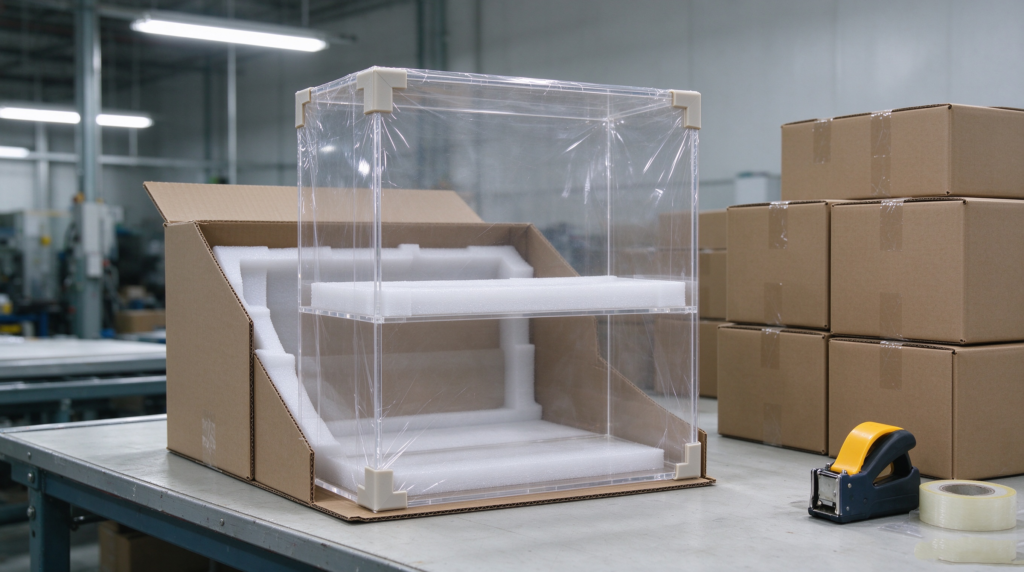
How MORICH Approaches Custom Acrylic Display Packaging
At MORICH, packaging requirements should be considered alongside the display’s design, materials, finishing, and intended application.
A small countertop display, a multi-tier cosmetics stand, and a display with several separate components may each require a different packaging approach.
When discussing a custom acrylic display project, buyers can provide:
Product dimensions and estimated weight.
Reference images or design drawings.
Requirements for clear surfaces and polished edges.
Whether the display will ship assembled or disassembled.
Estimated order quantity.
Shipping destination and preferred delivery method.
Any retail packaging or warehouse requirements.
These details help establish the packaging requirements early in the project.
For new designs, sampling and design review can also help buyers confirm the display’s structure before moving to mass production. You can read more about this process in our guide to Acrylic Display Prototyping.
If you are requesting a quotation, it is also useful to clarify whether packaging is included in the quoted price. Our guide to Custom Acrylic Display Quotes explains other factors that can affect the overall purchasing cost.
Frequently Asked Questions
What is the best packaging for acrylic displays?
There is no single best method for every display. Packaging should protect visible surfaces, vulnerable edges, and projecting components while keeping the product secure inside the carton. The appropriate solution depends on the design, size, weight, and shipping method.
How can I prevent scratches during shipping?
Protect visible surfaces with suitable non-abrasive materials, separate individual components, and prevent hard accessories from rubbing against the acrylic. The packaging should also keep the display from moving excessively during transportation.
Should acrylic displays be shipped assembled or disassembled?
It depends on the display structure and shipping requirements. Shipping assembled can simplify installation, while shipping disassembled may reduce carton volume for suitable designs. Compare protection, assembly requirements, package size, and total logistics cost before deciding.
Does better packaging always increase shipping costs?
Additional protective materials may increase packaging costs, but well-designed packaging can also reduce damage, replacement shipments, and avoidable delays. The objective is to find an appropriate balance between protection and total logistics cost.
What packaging information should I request from my manufacturer?
Ask about the packing method, protective materials, units per carton, carton dimensions, gross weight, and any special labeling requirements. These details are useful for evaluating shipping costs and planning warehouse receiving.
Final Thoughts
Acrylic display packaging is an important part of delivering a finished product in good condition. Protecting visible surfaces, reinforcing vulnerable areas, choosing suitable cartons, and matching packaging to the shipping method can help reduce avoidable transportation damage.
For purchasing teams, the best time to discuss packaging is before mass production, not after the displays are ready to ship.
Planning a custom acrylic display project? Contact MORICH with your display design, estimated quantity, and shipping requirements to discuss a suitable production and packaging solution.